

Wall Sconce Placement Guide covering the ideal height, spacing, materials, and light temperature for bedrooms, hallways, living rooms, entryways, and mirrors. The right wall sconce position depends on how the room is used, the height of nearby furniture, fixture size, beam direction, and whether the light is intended for reading, ambient lighting, or decoration.
The best wall sconce is not always the brightest one. In many homes, a sconce works because it sits at the right height, throws light softly, and has enough material presence to look intentional even when it is turned off. This is especially true with natural stone sconces. Alabaster, brass, glass, and warm LED light can make a plain wall feel architectural without making the room look over-designed.
This guide explains how to choose and place wall sconces for hallways, bedrooms, living rooms, entryways, and bedside areas. It covers height, spacing, shade direction, material, bulb warmth, dimming, installation planning, and the mistakes that make wall lights feel awkward. It is written for people who want lighting that feels calm, useful, and grown-in rather than simply decorative.
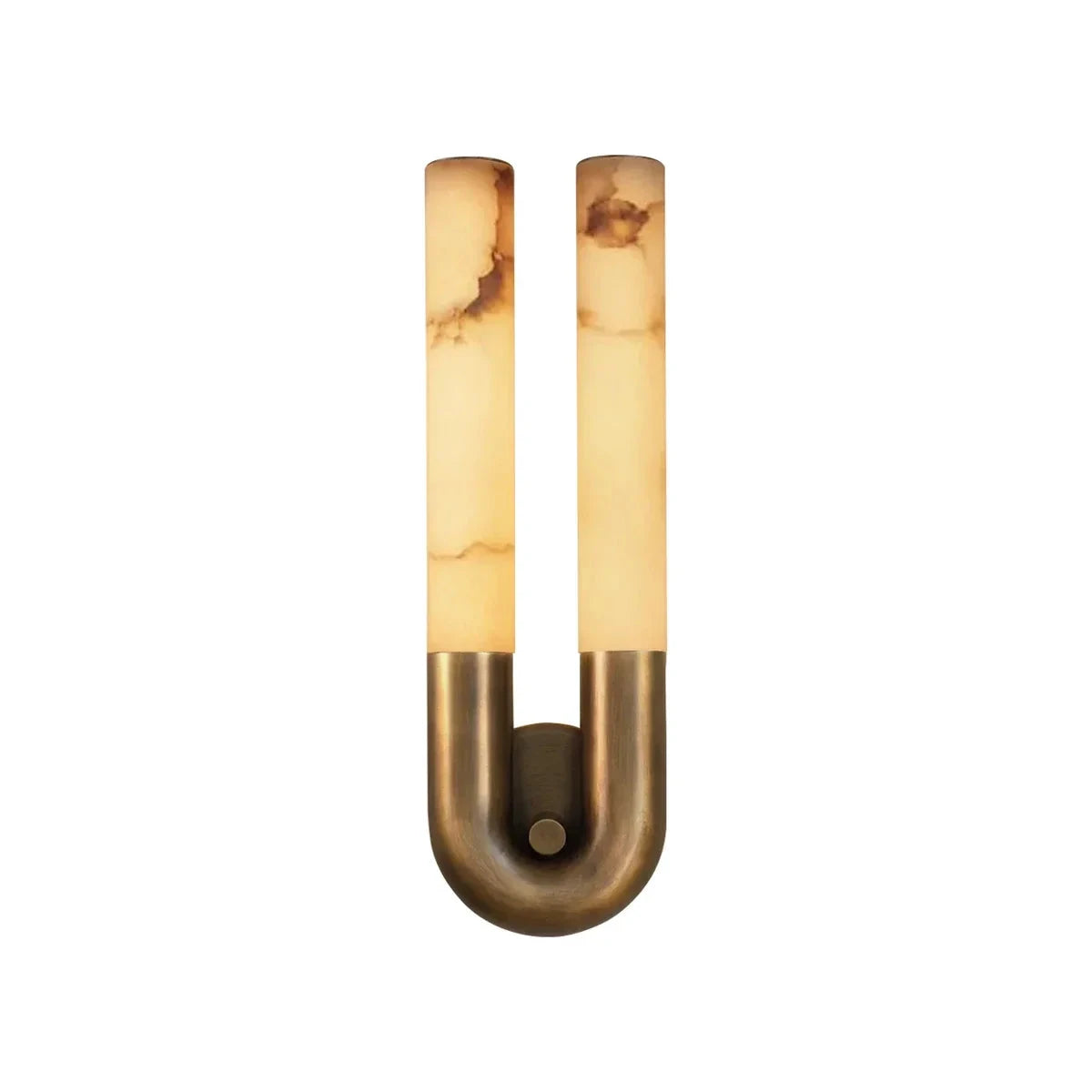
A sculptural alabaster sconce can make a simple wall feel finished without adding visual noise. Featured product: U-Shape Alabaster Arch Wall Sconce.
Wall Sconce Placement Guide: Height and Spacing
Before choosing a shape, decide what the sconce has to do. A hallway sconce needs to help people move through the space safely while making the corridor feel less flat. A bedside sconce needs to sit near the body and offer comfortable reading or ambient light. A living room sconce may be more about atmosphere, helping artwork, plaster, stone, or shelving come alive at night. An entryway sconce has to welcome people and hold its own near doors, mirrors, and ceiling fixtures.
When a wall light is chosen only for appearance, the room often gives the problem away later. The light may sit too high to be useful, too low to feel elegant, or too close to a mirror or door casing. The fixture may look good online but glare when someone walks past it. A beautiful sconce can still be wrong if its beam direction, scale, or brightness fights the room.
For a broad starting point, browse Liora Light's wall lamp collection and compare fixtures by role, not only by style. If the project is centered on a passageway, the hallway lighting collection is the more focused place to begin. For bedrooms, pair wall lights with the broader bedroom lighting collection so the bedside fixtures, ceiling light, and any table lamps feel related.
How High Should Wall Sconces Be Installed?
Most wall sconces look best when the center of the fixture sits roughly 60 to 66 inches from the floor. That range keeps the light near eye level without placing the bulb directly in the line of sight for most adults. It is a starting point, not a fixed rule. A tall sconce, a low ceiling, a high headboard, or a narrow hallway can all change the best height.
In hallways and entryways, think first about the eye line of someone walking through the space. If the sconce has an exposed bulb, strong uplight, or clear glass, raising it too close to eye level may create glare. In that case, a shaded, frosted, or stone diffuser is often more comfortable. If the fixture is made from alabaster, the stone can soften the light and let the sconce sit closer to the natural viewing height without feeling harsh.
In bedrooms, the best height depends on how the bed is used. A sconce placed only according to a general wall height may miss the real task: reading, getting in and out of bed, or creating a low evening glow. When a wall light is used beside a bed, measure from the mattress and headboard, not just from the floor. The bottom of the shade should not hit pillows or shoulders, and the switch should be reachable without stretching.
Liora Light's lighting size and installation guide is useful before wiring because it helps translate fixture dimensions into real clearances. For homes outside the United States, also check the global voltage reference guide and global plug guide before choosing hardwired, plug-in, or rechargeable pieces.
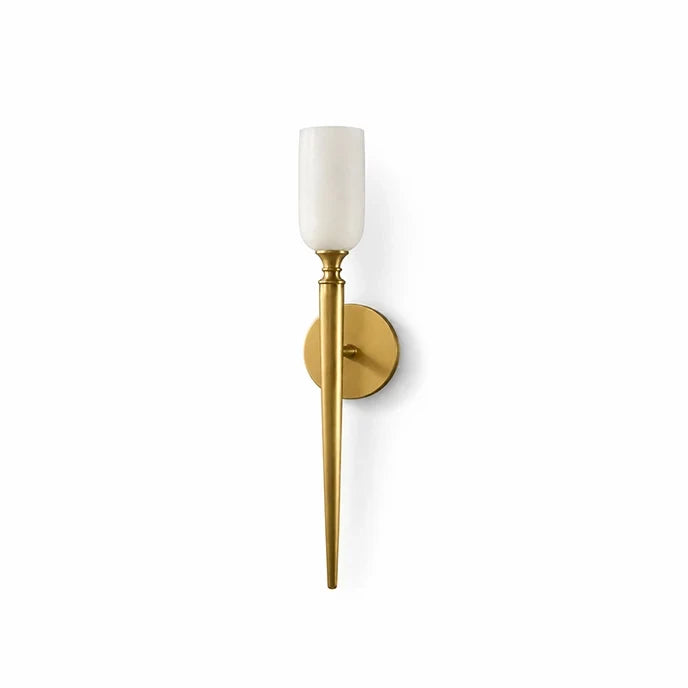
Vertical sconces help narrow walls feel taller and can work especially well in hallways. Featured product: Alabaster Torch Wall Sconce.
Hallway Sconce Spacing: Avoid the Runway Effect
A hallway should feel rhythmical, not theatrical. The most common mistake is placing too many identical wall sconces in a straight line, each one too bright, so the corridor starts to feel like a hotel passage. A better approach is to use enough light for movement while letting the wall remain quiet between fixtures.
In many residential hallways, sconces are spaced about 6 to 8 feet apart, depending on the fixture brightness, wall length, ceiling height, and whether there is a ceiling light nearby. Narrow corridors usually need softer fixtures with controlled glare. Wider hallways can carry larger sconces, especially if the walls have texture, artwork, arches, or console tables.
If the hallway turns a corner, do not force a perfect spacing formula. Let architecture lead. A sconce near a turn, doorway, niche, mirror, or art piece can feel more natural than an evenly measured row. The goal is to create visual pauses along the wall. Lighting should support the route through the home, not announce itself every few steps.
For long corridors, consider alternating the lighting rhythm with ceiling lights or a single statement fixture at the end. A wall sconce at the far end of a hallway can draw the eye forward and make the space feel less closed. If the hallway connects to a living room, entryway, or stair, choose finishes that relate to nearby lighting. This is where brass lighting, alabaster lighting, and warm glass can quietly connect one room to the next.
Why Alabaster Works So Well on Walls
Alabaster has a quality that is hard to imitate. It is translucent, but not glassy. It has movement, but it does not sparkle. It diffuses light in a way that can make the wall itself feel warmer. That is why alabaster wall sconces are useful in spaces where you want atmosphere without sharp highlights: hallways, bedrooms, dining alcoves, powder rooms, stair landings, and living rooms.
The natural veining matters. A plain opaque shade hides the bulb, but it does not give much back to the room. Alabaster softens the bulb while adding mineral texture. During the day, the stone reads as a material. At night, it becomes part of the light. This makes it especially good for modern interiors that risk feeling too flat: white walls, pale oak floors, stone counters, boucle upholstery, neutral rugs, and minimal trim.
Because alabaster has natural variation, two pieces will not look perfectly identical. That is part of its appeal. If you need a pair of sconces beside a bed or mirror, expect them to feel like relatives rather than exact copies. For many interiors, that small difference is what keeps the room from feeling overly manufactured.
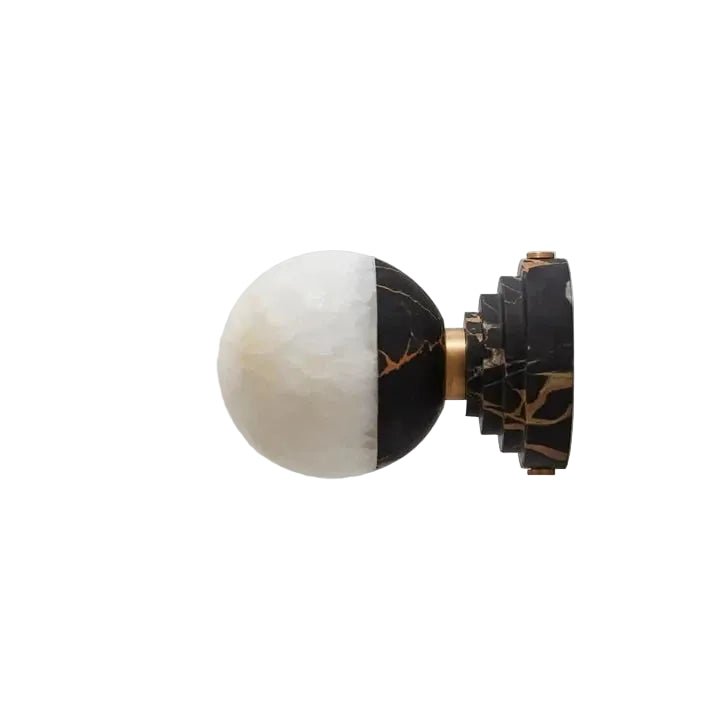
A globe shape gives stone lighting a softer silhouette beside mirrors, beds, and quiet living spaces. Featured product: Marble and Alabaster Globe Wall Sconce.
Bedside Wall Sconces: Measure From Real Life
Bedside sconces fail when they are designed for the photograph instead of the person in the bed. A good bedside wall light should be reachable, flattering, and comfortable from a seated position. The shade should not blast light into the eyes, and the fixture should not crowd pillows, art, or the headboard.
If the sconce is used for reading, place it where the light falls onto the page or lap rather than directly across the face. Adjustable sconces can help, but fixed alabaster or glass sconces can also work if they are selected for soft diffusion. For ambient bedside light, a fixture that washes the wall or glows through stone may be better than one that points down sharply.
Scale matters around the bed. A king bed with a tall upholstered headboard can handle larger sconces. A small guest room may need slimmer vertical fixtures or compact globes. If the nightstands are narrow, wall sconces free up surface space and make the room feel calmer. If the room already has table lamps, sconces can still work, but they should have a different role, such as low ambient glow or symmetry around art.
For a layered bedroom, pair sconces with a soft overhead fixture, dimmable bulbs, and possibly a reading lamp or table lamp. The bedroom lighting collection can help you compare these roles together. If you are choosing sconces for both a bedroom and adjacent hallway, keep one shared element, such as alabaster, brass, or a warm color temperature, so the transition feels deliberate.
Living Room Wall Lights Should Add Depth
Living rooms usually do not need wall sconces because there is no other way to light the room. They need sconces because ceiling lights and floor lamps often leave the walls visually dead. A sconce can give depth to a reading corner, bring attention to shelving, soften a fireplace wall, or balance a sofa when there is no room for another floor lamp.
In a living room, wall sconces should rarely be the brightest light source. They are better as a layer. Use them with ceiling lights, chandeliers, table lamps, or floor lamps so the room can shift throughout the day. A quiet wall sconce can make the room feel finished at night even when the main overhead light is off.
For rooms with strong central fixtures, choose sconces that support rather than compete. If the room already has a large chandelier, a simple stone or brass sconce may be enough. If the ceiling lighting is plain, a sculptural wall light can carry more personality. Browse the living room lighting collection together with the wall lamp collection to see how ceiling and wall fixtures can share a material story without matching exactly.

Backlit stone can create wall glow instead of direct brightness, which is useful in bedrooms and living rooms. Featured product: Curved Alabaster Backlit Wall Sconce.
Choose Warmth by the Room, Not by Habit
Warm white light is usually the safest choice for sconces used in living spaces. A color temperature around 2700K to 3000K tends to flatter skin, wood, brass, natural stone, fabric, and paint. Cooler light can be useful in workspaces, garages, or task-heavy areas, but it often makes bedrooms and hallways feel flat. With alabaster, overly cool bulbs can also fight the natural warmth of the stone.
Brightness should be modest unless the sconce is doing true task work. A wall light near a bed or reading chair may need more useful output than a decorative hallway sconce. A pair of sconces beside a mirror may need flattering front light, but too much brightness can create glare. Instead of thinking only in watts, compare lumens and color temperature. The FTC guide to shopping for light bulbs explains how bulb labels describe brightness and appearance, and ENERGY STAR's LED lighting overview is helpful for understanding efficiency and performance.
Dimming is one of the best upgrades for wall sconces. A hallway may need brighter light when guests arrive, but softer light late at night. A bedroom may need reading brightness at 9 p.m. and a much lower glow before sleep. A living room sconce may look best when it barely lifts the wall. If you plan to dim LED fixtures, confirm bulb and dimmer compatibility before installation.
Shade Direction Changes the Whole Mood
Wall sconces can glow outward, wash upward, shine downward, backlight the wall, or do several of these things at once. The direction of light is as important as the fixture shape. A downward shade can help with reading or vanity tasks. An upward sconce can make a ceiling feel taller. A backlit sconce can create soft atmosphere without visible glare. A globe or stone diffuser can glow in all directions, but it needs the right brightness so it does not become a bright dot on the wall.
In narrow spaces, avoid harsh outward glare. The closer people pass to the fixture, the more important diffusion becomes. Alabaster, frosted glass, fabric shades, and indirect LEDs are helpful here. In larger rooms, you can use more directional light because there is enough distance for the beam to soften before it reaches the eye.
Think about what the sconce will illuminate behind itself. A textured plaster wall, limewash finish, stone surface, or painted paneling can make indirect light beautiful. A glossy wall may reflect too much glare. A busy wallpaper may compete with a highly patterned stone shade. Lighting is never only about the object; it is about the object and the surface around it.
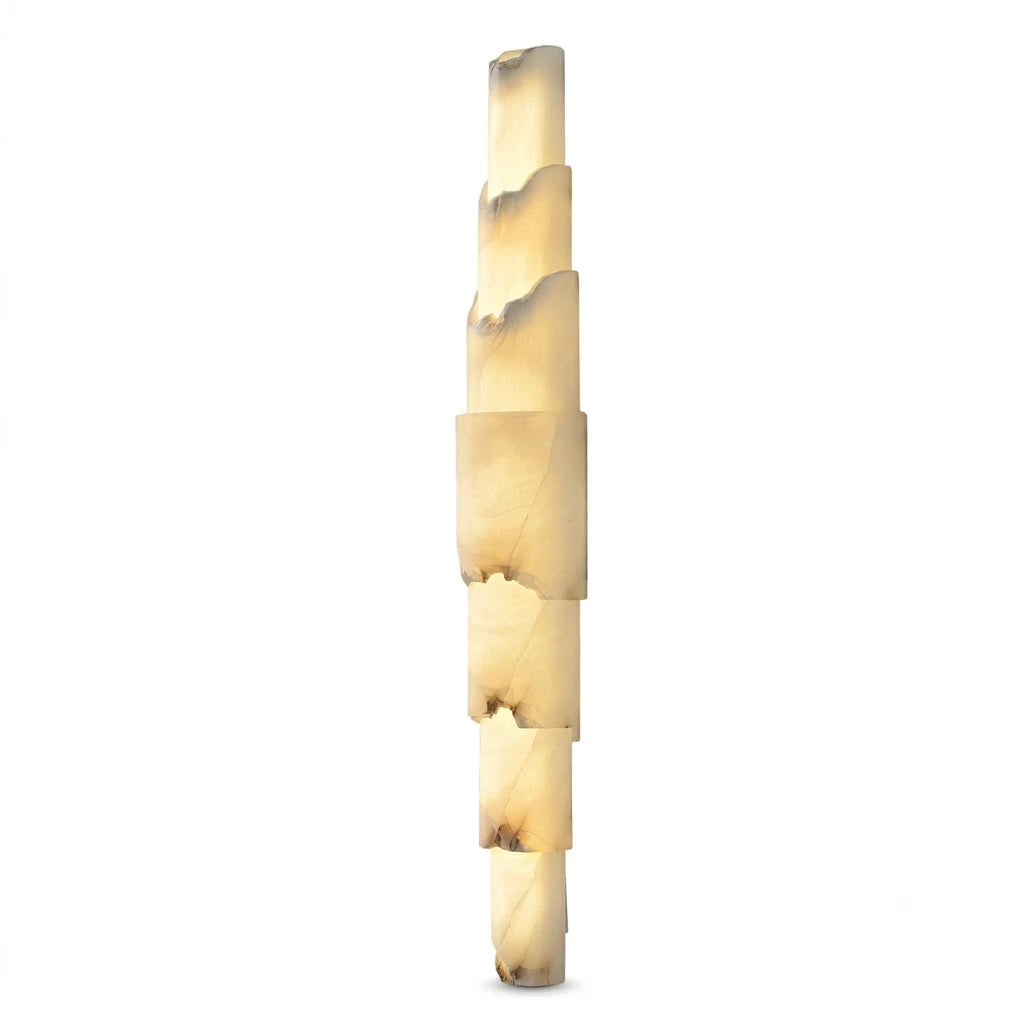
Visible veining gives a wall light character during the day and warmth at night. Featured product: Natural Veined Alabaster Wall Light.
Hardwired, Plug-In, or Rechargeable?
Hardwired wall sconces usually look the most permanent and integrated. They are the right choice for renovations, new builds, bathroom vanity walls, formal hallways, and rooms where the electrical layout is already planned. The tradeoff is commitment. Height, spacing, switch location, and fixture size need to be decided before the wall is closed or painted.
Plug-in sconces are useful when you want wall lighting without opening the wall. They can work beside beds, reading chairs, desks, and rental-friendly rooms. The cord becomes part of the look, so choose carefully. In some rooms, a visible cord feels casual and honest. In others, it may fight the finish level of the space.
Rechargeable wall lamps can solve a different problem: adding light where wiring is difficult, expensive, or unnecessary. They are especially useful for accent light, shelves, small reading corners, and spaces where the fixture is used for mood rather than all-night brightness. If you are considering this route, compare it with Liora Light's Alton Brass Rechargeable Wall Lamp and the broader wall lamp collection.
For any hardwired fixture, use a qualified electrician where local code requires it. Safety markings, wiring type, damp-location suitability, and voltage compatibility matter. Organizations such as UL Solutions publish lighting safety resources that are worth understanding before choosing fixtures for bathrooms, damp spaces, or international installations.
Pairing Wall Sconces With Ceiling Lights
The easiest way to make sconces feel expensive is to make them part of a lighting family. That does not mean every fixture should match. In fact, matching too closely can make a room feel like it was bought all at once. A better method is to repeat one or two qualities: warm brass with stone, clear glass with ribbed glass, soft white shades with warm bulbs, or black details with a thin metal frame.
If the ceiling fixture is sculptural, keep the sconces quieter. If the ceiling fixture is simple, the sconces can carry more shape. If the room already has a material hero, such as a stone fireplace, marble vanity, or wood headboard, choose sconces that either echo that material or give it contrast. Alabaster often works because it sits between decorative and architectural. It has enough texture to be noticed, but it does not shout.
For an open-plan home, choose fixtures across rooms in one pass. Look at the chandelier collection, pendant lamp collection, and wall lamp collection together. A dining chandelier, kitchen pendant, and hallway sconce should not all compete for attention. Let one fixture lead and let the others create rhythm.
Common Wall Sconce Mistakes
The first mistake is mounting sconces too high. A wall light near the ceiling often feels stranded unless it is specifically designed as an uplight. The second mistake is using bulbs that are too cool or too bright. Wall lights sit close to eye level, so glare is noticed quickly. The third mistake is ignoring nearby architecture. Doors, trim, mirrors, art, switches, and furniture should all be measured before installation.
Another mistake is choosing a tiny sconce for a large wall. People often under-scale wall lights because sconces look larger in product photos than they do in a finished room. Check the dimensions carefully. Tape the outline on the wall if needed. A slightly larger sconce with soft light often looks more intentional than a small fixture that tries to disappear.
Finally, do not treat wall sconces as isolated objects. They should belong to the room's lighting plan. A hallway sconce should make sense with the entry light. A bedside sconce should make sense with the ceiling fixture. A living room sconce should make sense with lamps, art, and furniture. When that relationship is right, the room looks calm even before anyone notices the individual fixture.
A Simple Room-by-Room Placement Checklist
For hallways, place sconces near eye level, soften glare, and space them by architecture first and measurement second. For bedrooms, measure from the mattress, headboard, and reach of the person using the light. For living rooms, use sconces to add depth to walls rather than trying to replace every lamp. For entryways, choose a fixture with enough presence to be seen during the day and enough diffusion to feel welcoming at night.
For mirrors, place sconces where they light the face evenly rather than from above alone. For artwork, avoid fixtures that throw hot spots unless the goal is a picture-light effect. For stairways, check clearances carefully and make sure the fixture does not project too far into the path of movement.
If you are unsure about scale, collect the room dimensions, ceiling height, wall width, mounting height, and a photo of the space. Liora Light's free 3D drawing service can help visualize how a fixture may sit in the room before you commit. For order, shipping, and product details, the FAQ page is also worth checking before purchase.
FAQ
What is the best height for wall sconces?
Most wall sconces are installed with the center of the fixture about 60 to 66 inches from the floor. Adjust that range for ceiling height, fixture size, glare, furniture, mirrors, headboards, and the person using the light.
How far apart should hallway sconces be?
Many hallway sconces are spaced about 6 to 8 feet apart, but architecture matters more than a perfect formula. Doorways, corners, artwork, mirrors, and the end of the hallway should guide the rhythm.
Are alabaster wall sconces good for bedrooms?
Yes. Alabaster diffuses light softly and adds natural texture, which makes it well suited to bedrooms, bedside areas, reading corners, and calm evening light. Use warm bulbs and dimming when possible.
Should bedside sconces point up or down?
For reading, downward or adjustable light is useful. For atmosphere, a glowing stone shade or backlit sconce may feel better. The right choice depends on whether the sconce is task lighting, ambient lighting, or both.
Can wall sconces be the only light in a hallway?
They can, if there are enough fixtures and the light is comfortable. Long or dark hallways may still benefit from ceiling lights, recessed lights, or a statement fixture at the entry or end point.
What color temperature is best for wall sconces?
For most homes, 2700K to 3000K warm white is the best range. It flatters skin, wood, brass, stone, and fabric. Cooler light can feel too sharp in bedrooms, hallways, and living rooms.
Do wall sconces need to match chandeliers or pendants?
No. They should relate, not match exactly. Repeat one material, finish, shape, or color temperature so the fixtures feel connected while still allowing each room to have its own character.