

Choosing lighting is not just a question of brightness. The right fixture changes the weight of a room. It can make a dining table feel more generous, a hallway feel intentional, a bedroom feel slower, and a kitchen feel less like a work surface and more like the center of the home. That is why luxury lighting should be chosen the way good furniture is chosen: with attention to proportion, material, finish, and the way people actually move through the room.
The short answer is this: the best luxury lighting plan combines three things. First, the fixture must be the right scale for the room. Second, the material should support the mood of the space, whether that means alabaster, travertine, brass, glass, rice paper, or fabric. Third, the light itself should be warm, comfortable, and layered, rather than coming from one harsh overhead source.
At Liora Light, many customers begin with a single statement piece, such as a chandelier or pendant lamp. That is a good starting point, but the most beautiful rooms usually do not rely on one fixture alone. They use lighting as a system: a ceiling fixture for architecture, wall lamps for rhythm, table or floor lamps for softness, and accent lighting to bring texture forward.
Start With the Room, Not the Fixture
A fixture can be beautiful online and still feel wrong at home. Usually, the problem is not taste. It is context.
Before looking at finishes, ask what the room needs to do at different times of day. A kitchen needs practical task light over counters, but it also needs a calmer evening setting. A dining room needs enough light to see food and faces, but not so much that dinner feels like a meeting. A bedroom needs light for reading, dressing, and winding down. A hallway needs guidance and atmosphere. A foyer needs a fixture that feels composed from both outside the front door and inside the home.
This is where layered lighting matters. The three basic layers are ambient light, task light, and accent light. Ambient light gives the room general illumination. Task light supports specific work, such as cooking or reading. Accent light adds depth by highlighting art, texture, stone, wood grain, or architectural lines. The Illuminating Engineering Society publishes lighting standards and design guidance for many types of spaces, but in a home the principle is easy to feel: a room with only one bright ceiling light often looks flat, while a room with several lower, softer sources looks lived in and considered.
Get the Scale Right First
Scale is the part of lighting that people often underestimate. A small pendant above a large island can look accidental. A chandelier that is too wide for a table can crowd the room. A ceiling light that sits too low can interrupt sightlines. Good luxury lighting should have presence without making people duck, squint, or rearrange their habits around it.
For chandeliers, start with the table or room below the fixture. In a dining room, the chandelier should relate to the table more than the walls. A long rectangular table often suits a linear chandelier or a series of pendants. A round table can take a round chandelier, globe cluster, lantern shape, or sculptural form. Liora Light's chandelier collection is useful here because it includes both statement silhouettes and more architectural shapes.
For kitchen islands, the fixture needs to balance three jobs: light the work surface, respect the sightline across the room, and look proportionate from the living or dining area. A pair of pendants can work beautifully over a medium island, while a linear pendant or island chandelier may feel cleaner over a longer counter. If you are unsure about spacing, compare fixture width, island length, ceiling height, and the visual gap between shades. Liora's kitchen island ceiling guide and lighting size and installation guide are the best internal references to link here.
For entryways, height matters more than almost anywhere else. A foyer chandelier should not feel trapped near the ceiling, but it also should not hang so low that it blocks the door, staircase, or view into the home. If the ceiling is high, a taller chandelier can make the vertical space feel finished. If the ceiling is modest, a flush mount or semi-flush ceiling light may be more elegant than forcing a hanging fixture into the room. Use the foyer chandelier guide when planning this type of installation.

Choose Materials by the Mood They Create
Luxury lighting is not only about polish. In many modern homes, the most expensive-looking rooms are the ones that mix natural texture with controlled simplicity. This is where material choice becomes important.
Alabaster lighting has a soft, mineral quality. It diffuses light rather than throwing it sharply, which makes it especially good for bedrooms, hallways, dining rooms, and quiet living spaces. Each piece of stone has natural variation, so an alabaster wall lamp or chandelier feels less manufactured than a plain acrylic diffuser. Alabaster works well with warm white bulbs, pale walls, oak, walnut, brushed brass, and muted stone finishes.
Travertine has a different character. It feels warmer, earthier, and more architectural. A travertine lamp can make a room feel grounded without adding heavy color. It suits interiors with limewash walls, boucle upholstery, dark wood, neutral rugs, black accents, or quiet Mediterranean and Japandi influences. Travertine is especially strong when the room already has natural surfaces and you want the lighting to feel integrated rather than shiny.
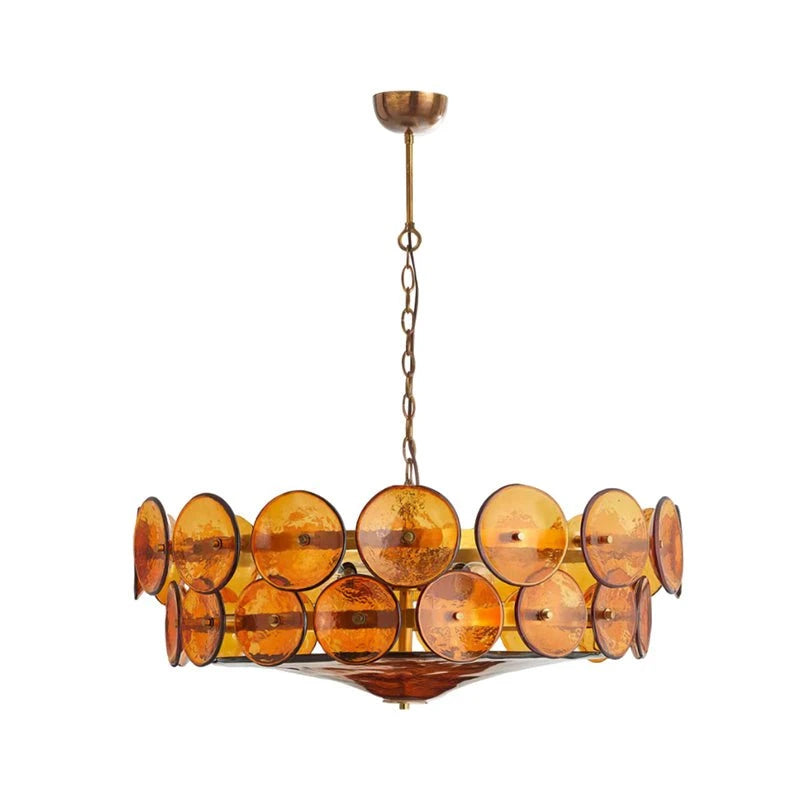
Glass lighting brings reflection and movement. Clear glass feels airy. Frosted glass softens the bulb. Ribbed or fluted glass adds texture. Colored or Murano-style glass can become the artistic note in an otherwise restrained room. For dining rooms and living rooms, glass lighting can make the ceiling plane feel lighter than a metal-heavy fixture would.
Brass adds warmth without relying on color. It works well in traditional homes, but also in modern rooms that need a warmer counterpoint to white walls, marble, concrete, or black metal. The key is restraint. One brass chandelier can be enough. A brass wall lamp can echo cabinet hardware or a picture frame. Too much matching metal can feel staged; a few repeated notes feel intentional.
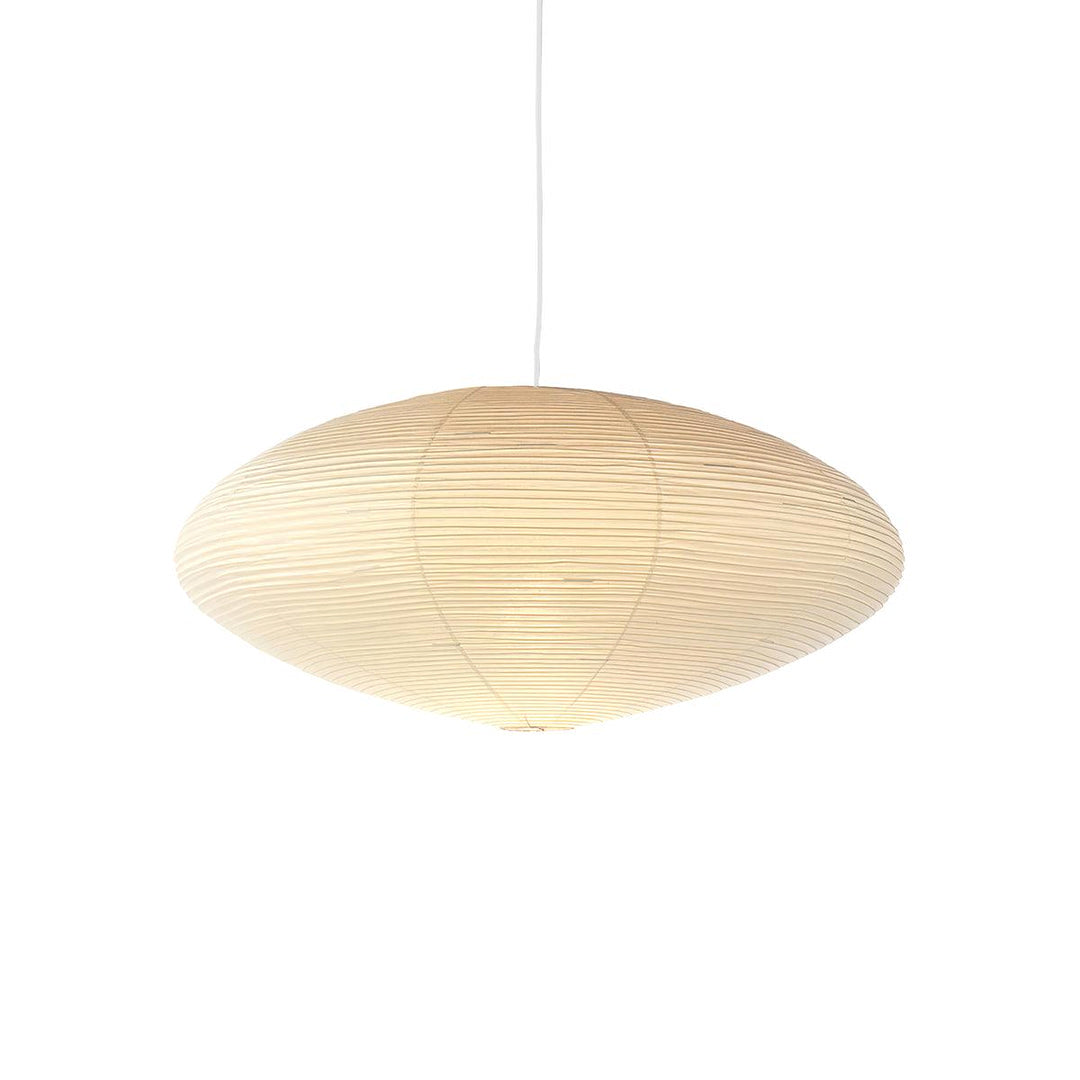
Rice paper and Akari-inspired lighting create a different kind of luxury, one based on quietness. Akari paper lamps are useful in living rooms and bedrooms because the glow feels soft and human. They are not the right choice for every task, but as atmospheric lighting they make a room feel calm almost immediately.

Room-by-Room Lighting Strategy
Living Room
A living room should rarely depend on a single ceiling fixture. Start with one visual anchor, then add lower light sources. A ceiling light or chandelier can give the room structure, but floor lamps, table lamps, and wall lamps create comfort. In an open-plan space, lighting can also define zones without adding walls.
If the living room has a large coffee table or central seating group, choose a fixture that relates to that arrangement. If the room is smaller, consider a flush mount or a sculptural ceiling light that does not crowd the ceiling. Browse living room lighting for a mix of ceiling, wall, and portable pieces that can be layered.
Dining Room
The dining room is where lighting becomes most emotional. A good dining fixture makes the table feel like a destination. It should lower the visual center of gravity without blocking conversation. Warm light is usually more flattering here than cool light, especially at night.
For a rectangular table, look at linear chandeliers, elongated forms, or multiple pendants. For a round table, a rounded chandelier or clustered pendant can feel more natural. If the room already has ornate furniture, use a simpler fixture. If the furniture is restrained, a more expressive chandelier can carry the room. Start with dining room lighting, then compare shapes in the chandelier collection.
Kitchen
Kitchen lighting needs discipline. It is easy to choose attractive pendants and forget that knives, counters, sinks, and cooking surfaces need practical light. The best kitchen lighting usually includes ceiling or recessed ambient light, task lighting near work zones, and pendants or a linear fixture above the island.
The island is the most visible opportunity. A pair of pendants can soften a modern kitchen, while a long fixture can keep the space clean and architectural. Use warm or neutral light depending on the finishes. Very cool bulbs can make stone counters feel sterile. Very warm bulbs can distort whites and make food prep less clear. The kitchen lighting collection and pendant lamp collection are the most relevant internal destinations here.
Bedroom
Bedroom lighting should make the room feel slower. Start with softness, then add function. A ceiling fixture is useful, but bedside lighting often does more for the atmosphere of the room. Wall lamps can free the nightstand surface and create a more tailored look. Table lamps are easier to move and change. A pendant can work beautifully above a nightstand if the scale is gentle and the drop is carefully planned.
Warm white light is usually the better choice for bedrooms. For a calmer effect, avoid exposed bulbs at eye level unless they are shaded, frosted, or very low-glare. Explore bedroom lighting and wall lamps for pieces that sit closer to the body and daily routine.
Hallway and Entryway
Hallways often get the least attention, but they shape the way a home is experienced. A row of wall sconces can make a narrow hallway feel designed rather than leftover. In a wider corridor, ceiling lights can create rhythm. In an entryway, one strong chandelier or pendant can establish the tone of the entire home.
If the hallway is narrow, keep projection in mind. A beautiful wall lamp that sticks too far into the walkway will quickly become annoying. If the entry ceiling is high, choose a fixture with enough vertical presence. If the entry is small, a warm flush mount can be more refined than an oversized chandelier.
Understand Light Quality: Lumens, Kelvin, CRI, and Dimming
The fixture is only half the story. The bulb or integrated LED determines how the room actually feels.
Lumens measure brightness. Watts measure energy use. Many shoppers still talk about watts because older incandescent bulbs made that easy, but modern LEDs make lumens the better reference. The FTC guide to shopping for light bulbs explains why lumens, light appearance, and labels matter when comparing bulbs.
Color temperature is measured in Kelvin. Lower Kelvin values look warmer and more golden; higher values look cooler and bluer. The U.S. Department of Energy explains that artificial light can range from warm white to cool white, and that this affects mood and appearance in a space. For many modern homes, 2700K to 3000K is the safest range for living rooms, bedrooms, dining rooms, and hallways. Kitchens and bathrooms can sometimes use slightly cleaner light, especially near task areas, but the final choice should respect the finishes in the room.
CRI, or Color Rendering Index, describes how accurately colors appear under a light source. This matters for food, artwork, fabric, wood, makeup, and stone. A low-quality bulb can make expensive materials look dull. A higher CRI bulb usually makes finishes feel more natural.
Dimming is not a luxury extra. It is one of the simplest ways to make a fixture useful throughout the day. A dining chandelier at full brightness may be right for cleaning or setting the table, but too bright for dinner. A living room ceiling light may need one level for reading and another for a quiet evening. When choosing LED bulbs or integrated fixtures, check dimmer compatibility. The ENERGY STAR LED lighting overview is a helpful non-commercial resource for understanding LED behavior, heat management, and performance.
Safety matters too, especially for hardwired fixtures, damp locations, bathrooms, and ceiling fans. UL Solutions provides information on lighting safety testing and certification, including luminaires and LED equipment. For installation, always follow local electrical code and use a licensed electrician where required.
Think About Voltage, Plugs, and Markets Before You Buy
Because many modern lighting customers shop across borders, voltage and plug compatibility should be checked before purchase. A fixture that works in the United States may require different specifications in the United Kingdom, Europe, Canada, or Australia. Hardwired ceiling fixtures are different from plug-in lamps, and portable lamps may need the correct plug type.
If you are buying for an international home, rental property, or project across markets, review Liora Light's global voltage reference guide and global plug guide before finalizing the order. This is especially important for table lamps, floor lamps, plug-in wall lamps, rechargeable wall lamps, and any project where installation will happen after shipping.

Common Luxury Lighting Mistakes
The first mistake is choosing a fixture that is too small. Small lighting can make an otherwise well-furnished room feel unfinished. If you are hesitating between two sizes and both fit safely, the slightly larger option often looks more intentional, especially over a dining table or in a foyer.
The second mistake is using only overhead lighting. Even an expensive chandelier can feel harsh if it is the only light in the room. Add a wall lamp, floor lamp, or table lamp to bring the light closer to human scale.
The third mistake is ignoring glare. Exposed bulbs, clear shades, and high-output LEDs can be beautiful, but they need careful placement. If a bulb is directly in your line of sight when seated, eating, or lying in bed, the fixture may become uncomfortable.
The fourth mistake is choosing the wrong color temperature. Cool light can work in task-heavy areas, but it often makes living spaces feel less intimate. Very warm light can be beautiful at night but may not be practical for kitchens or bathrooms. The goal is not one perfect Kelvin value for the whole house. The goal is consistency within each room and a mood that fits the activity.
The fifth mistake is forgetting installation details. Canopy size, ceiling slope, cord length, fixture weight, wall projection, damp rating, dimmer compatibility, and bulb access all matter. A fixture should be beautiful on day one and easy to live with two years later.
A Simple Buying Sequence
If you are planning a whole-room update, choose lighting in this order.
First, define the room's main activity and mood. Second, choose the primary fixture type: chandelier, pendant, ceiling light, wall lamp, table lamp, or floor lamp. Third, confirm the size, drop, and clearance. Fourth, choose the material and finish. Fifth, decide the bulb temperature, brightness, and dimming plan. Sixth, check installation requirements. Finally, add secondary lighting so the room can shift between practical and atmospheric settings.
If the space is difficult, use a visual planning step before ordering. Liora Light's free 3D drawing service is especially useful for large chandeliers, kitchen islands, foyers, staircases, and projects where fixture scale is hard to judge from product photos alone.
Final Thought
Luxury lighting should not shout from the ceiling. It should make the room feel resolved. The best fixture looks as if it belongs to the architecture, supports the furniture below it, and gives the people in the room a better version of the life already happening there.
Start with scale. Choose materials with feeling. Use warm, layered light. Then let each room tell you whether it needs a sculptural chandelier, a quiet alabaster sconce, a travertine lamp, a glass pendant, or a paper shade that softens the whole evening.
FAQ
What is the best lighting for a modern home?
The best lighting for a modern home combines ambient, task, and accent lighting. Use a main ceiling fixture for structure, then add wall lamps, floor lamps, table lamps, or pendants to create softer layers and better function.
Is warm white or cool white better for luxury lighting?
Warm white light, usually around 2700K to 3000K, is often better for living rooms, dining rooms, bedrooms, and hallways because it feels softer and more flattering. Kitchens and bathrooms can use slightly cleaner light in task areas, but avoid overly cool light if the room is meant to feel warm and residential.
How do I choose the right chandelier size?
Start with the table or room below the chandelier. For dining rooms, the chandelier should feel proportionate to the table and leave comfortable visual space around the edges. For foyers, consider ceiling height, door swing, staircase sightlines, and overall vertical scale.
Are alabaster lights worth it?
Alabaster lights are worth considering when you want soft diffusion, natural variation, and a quieter luxury feel. They work especially well in bedrooms, hallways, dining rooms, and living spaces where glare control and material warmth matter.
What is the difference between pendant lights and chandeliers?
Pendant lights usually hang as single fixtures or repeated units and are often used over kitchen islands, counters, bedside areas, and smaller tables. Chandeliers usually have a broader form or multiple arms, shades, or light points, making them better for dining rooms, foyers, living rooms, and statement spaces.
Should every room have matching lighting?
No. Lighting should feel related, not identical. Repeat one or two elements, such as warm brass, soft glass, stone texture, or rounded forms, but allow each room to have a fixture that suits its scale and function.