

Travertine Lighting Guide by Liora Light explains how to use natural stone lighting to create warm, calm, and minimalist interiors. Travertine brings natural texture, soft color variation, and architectural character to pendant lights, wall sconces, ceiling lights, and table lamps. When paired with warm lighting, wood, brass, linen, and neutral finishes, it can make modern rooms feel softer and more grounded without becoming visually heavy.
The key is restraint. Travertine is not a material that needs to be shouted across a room. It works best when the shape is clean, the light is warm, and the fixture has enough space around it to let the stone read naturally. Used well, a travertine pendant, wall lamp, ceiling light, or table lamp can make a room feel calmer, softer, and more architectural.
This guide explains how to choose travertine lighting for warm minimalist homes, organic modern interiors, Japandi-inspired rooms, Mediterranean spaces, and quiet contemporary apartments. It covers material character, room placement, color temperature, fixture scale, pairing travertine with wood or brass, and the mistakes that make natural stone lighting feel too heavy.
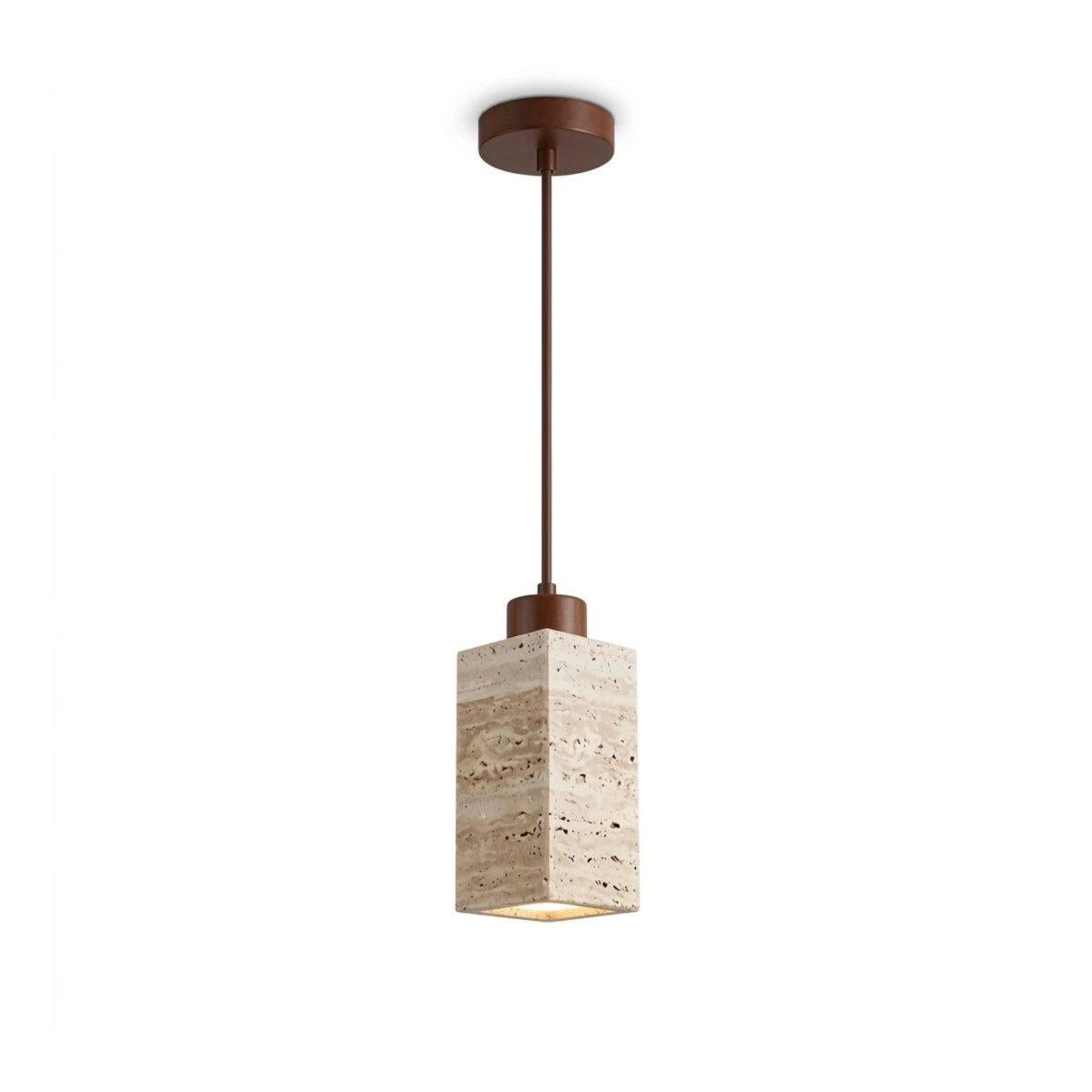
A travertine pendant brings stone texture into the room without needing a large decorative gesture. Featured product: Natural Travertine Pendant Light.
Travertine Lighting Guide for Warm Minimalist Homes
Travertine sits between stone, earth, and architecture. It has visible pores, natural veining, and a warm neutral color that can range from ivory and beige to honey, taupe, and soft gray. Unlike polished crystal or clear glass, it does not try to sparkle. Unlike black metal, it does not define a room with hard contrast. It adds weight, but the weight is calm.
That is why travertine lighting works so well in interiors built around natural materials. It looks comfortable near plaster walls, limewash paint, oak floors, walnut cabinetry, linen curtains, boucle chairs, stone counters, ceramic vessels, and brushed brass details. It also helps balance modern rooms that have too many smooth surfaces. A simple travertine wall light can make a flat painted wall feel more considered. A travertine pendant over a kitchen island can soften a room with stone countertops and clean cabinetry.
Compared with alabaster lighting, travertine usually feels earthier and more matte. Alabaster is often more translucent and luminous, while travertine feels more grounded and architectural. Compared with glass lighting, travertine is less reflective and more textural. Compared with brass lighting, it feels quieter and more organic. None is better in every room. The right choice depends on what the space is missing.
Use Travertine Where the Room Needs Warmth, Not Shine
A good way to decide whether travertine belongs in a room is to ask what the room needs after sunset. If it needs sparkle, movement, or a sense of occasion, glass or a sculptural chandelier may be better. If it needs softness, warmth, and material depth, travertine is often the stronger choice.
Travertine is especially useful in rooms that already have a lot of straight lines. Kitchens with slab cabinet doors, long islands, quartz counters, and minimal hardware can feel sharp if every light fixture is metal or glass. A travertine pendant introduces a natural edge without breaking the clean mood. Dining rooms with simple tables and neutral chairs can also benefit from the stone's weight. It gives the table an anchor without making the ceiling feel crowded.
In bedrooms and hallways, travertine wall lights can create a warm transition from public space to private space. A hallway often has little furniture, so material becomes important. A bedroom needs lower, calmer light than a kitchen. Travertine works in both because it has presence during the day and a quiet glow at night.
For room-by-room planning, start with Liora Light's travertine lighting collection, then compare it with the living room lighting, dining room lighting, kitchen lighting, and bedroom lighting collections. Travertine should not be chosen in isolation. It should belong to the room's whole lighting plan.
Travertine Pendants for Kitchens and Dining Areas
Travertine pendants are most effective when the ceiling light needs to feel connected to the surfaces below it. Over a kitchen island, the pendant should relate to the countertop, cabinet finish, and hardware. If the island has stone counters, a travertine pendant can echo that material without matching it exactly. If the kitchen has wood cabinets, travertine can keep the room from becoming too warm or too brown by adding a lighter mineral tone.
Scale matters. A small pendant can look charming over a narrow counter, but it may disappear above a large island. A long island may need two or three pendants, or a single elongated fixture. The goal is not to fill every inch of air. The goal is to create enough rhythm that the island feels finished. Before committing, measure island length, island width, ceiling height, pendant diameter, and hanging drop. Liora Light's kitchen island ceiling guide and lighting size and installation guide are useful starting points.
In dining rooms, travertine pendants work best when the table is simple and the rest of the room has soft texture. A travertine fixture can make a plain wood table feel more elevated. It can also quiet a dining area that opens into a bright kitchen. If the dining room already has a lot of heavy stone, dark furniture, and large art, use travertine carefully. Too many dense materials can make the room feel slower than intended.
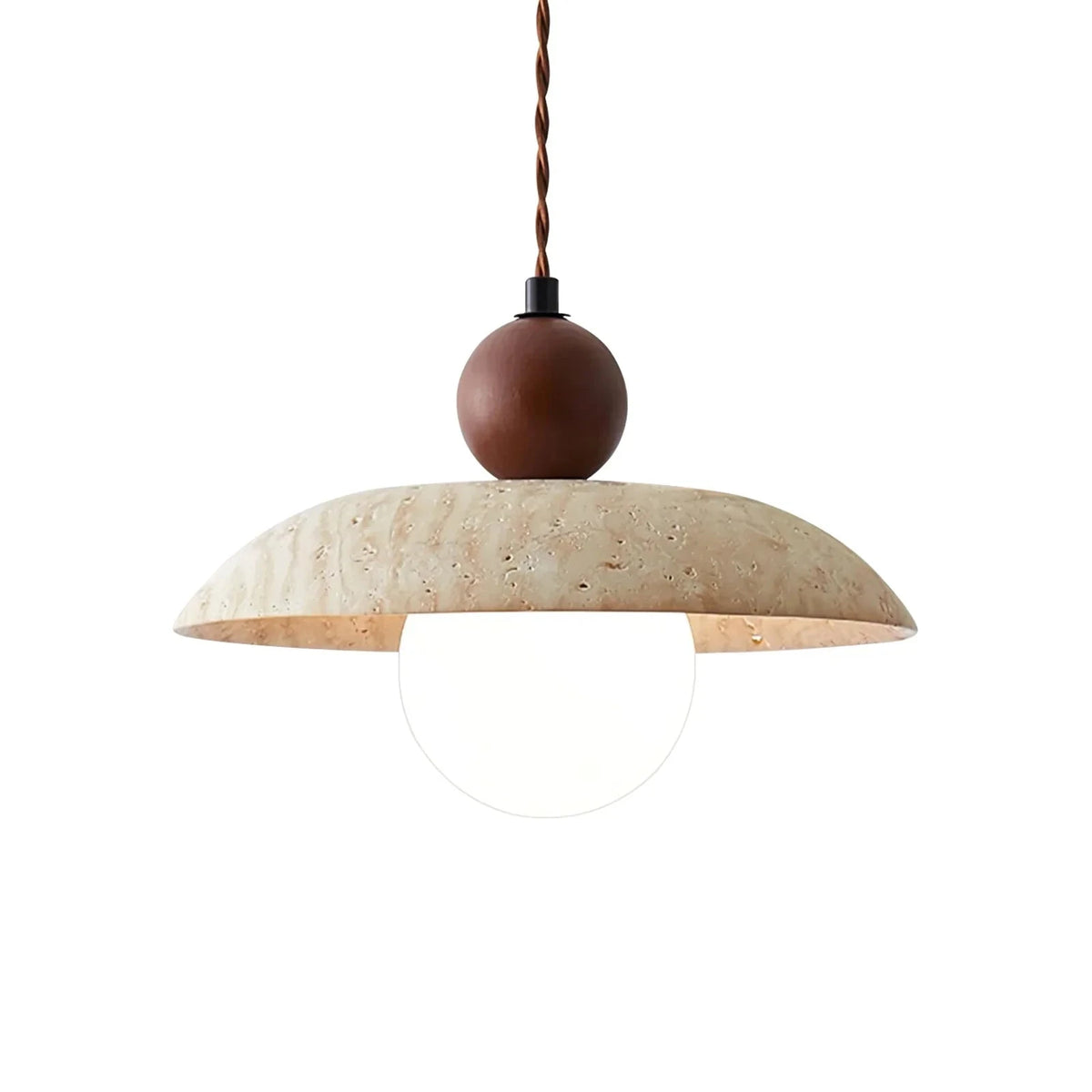
Rounded travertine forms are useful when a kitchen or dining area needs softness rather than more shine. Featured product: Travertine Soluna Pendant Light.
Travertine Wall Lamps for Hallways and Bedrooms
Wall lamps are one of the easiest ways to use travertine without overwhelming a room. Because a wall sconce is usually smaller than a chandelier or large pendant, it lets the stone become a detail rather than the main event. In hallways, this can be exactly right. A travertine wall lamp gives the wall texture and rhythm while keeping the space quiet.
For most wall sconces, the center of the fixture sits roughly 60 to 66 inches from the floor, though the exact height depends on ceiling height, fixture size, door trim, mirrors, artwork, and whether the light creates glare. A narrow hallway usually needs soft diffusion and modest brightness. A tall entryway can handle a larger or more sculptural sconce. If you are planning a long corridor, avoid placing too many bright fixtures in a rigid row. Let doorways, corners, and art create the rhythm.
In bedrooms, travertine sconces can replace bedside table lamps or add a lower ambient layer. Measure from the mattress and headboard, not only from the floor. The switch should be reachable, the fixture should not crowd pillows, and the light should not shine directly into the eyes. If the sconce is mainly decorative, a soft glow is enough. If it is used for reading, choose the beam direction more carefully.
For more wall-specific planning, connect this topic with Liora Light's wall lamp collection and hallway lighting collection. Travertine is particularly useful when those areas need warmth but do not have space for furniture, rugs, or large decorative objects.
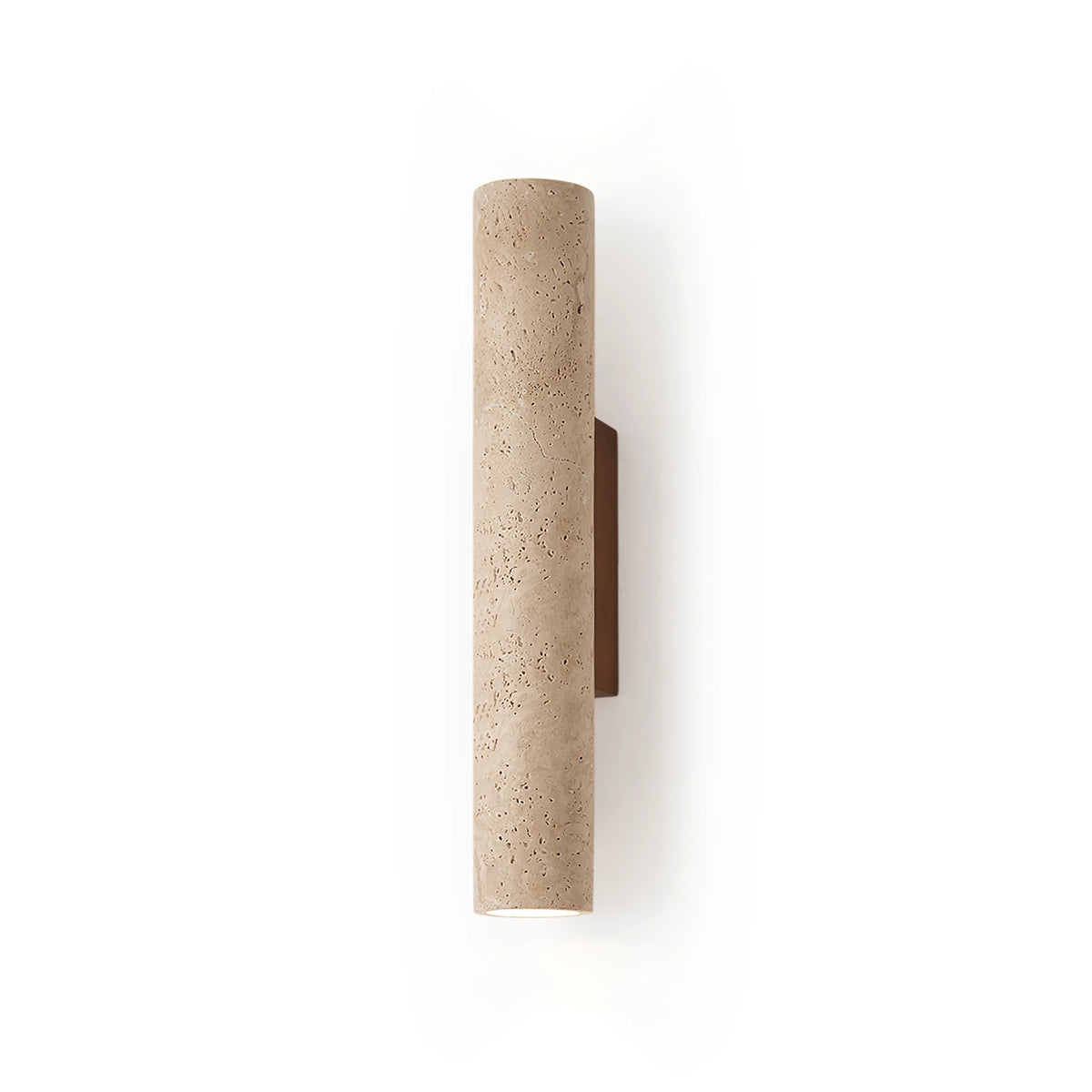
Travertine and walnut create a warmer, more furniture-like wall light for bedrooms and corridors. Featured product: Travertine Walnut Cylinder Wall Sconce.
Travertine Ceiling Lights for Low Ceilings
Not every room can take a pendant or chandelier. Low ceilings, small bedrooms, compact hallways, and apartments often need lighting that stays close to the ceiling. This is where a travertine ceiling light can be useful. It gives the room a natural material point without requiring a long drop.
A flush or semi-flush travertine fixture works best when it has enough diameter to feel intentional. If it is too small, it can look like an afterthought. If it is too thick or heavy, it can make a low ceiling feel lower. Look at the ceiling height, room width, furniture scale, and how much the fixture projects downward. In small rooms, the fixture should feel compact but not timid.
Travertine ceiling lights are especially good in rooms where a plain white flush mount would feel too basic. A hallway, dressing area, powder room, breakfast nook, or small bedroom can gain a lot from one well-chosen stone fixture. If the room is connected to a larger space, repeat a related material elsewhere: a travertine lamp on a console, a stone object on a shelf, brass hardware, or warm wood furniture.
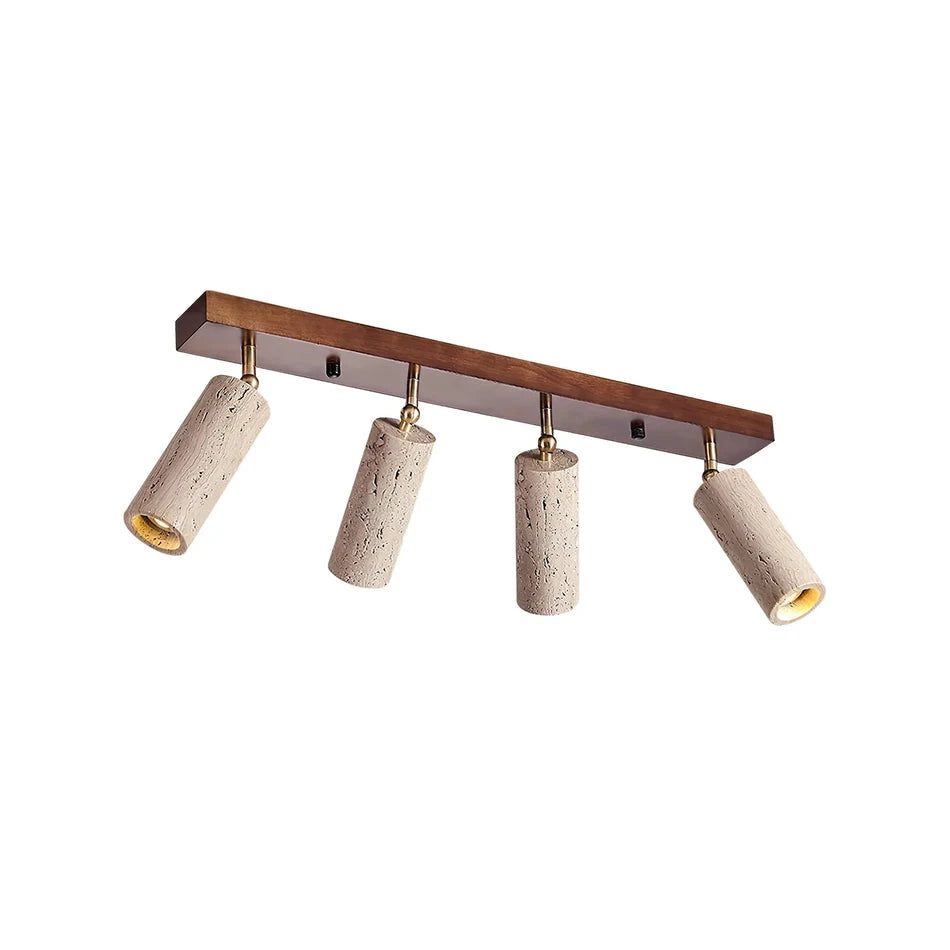
A close-to-ceiling travertine fixture can add material depth where a pendant would hang too low. Featured product: Travertine Ceiling Light.
Travertine Table Lamps for Softer Evening Light
A travertine table lamp is the least architectural and often the most flexible way to use the material. It can sit on a console, side table, bedside table, desk, or open shelf. Because it is not fixed to the wall or ceiling, it can move as the room changes. This makes it useful for people who like the look of stone lighting but are not ready to commit to hardwiring.
Travertine table lamps work best when the base has enough weight to feel deliberate and the shade softens the light. A stone base paired with a fabric shade can be especially warm. It brings together mineral texture and domestic softness. In a living room, a travertine lamp can balance a plain sofa or side table. In a bedroom, it can make a simple nightstand feel more finished.
Do not treat the lamp as a small accessory if the room needs real light. Check bulb type, shade opacity, height, and the spread of light on the table and wall. A beautiful lamp that only glows inside itself may not help the room very much. A good table lamp gives both object presence and usable atmosphere.
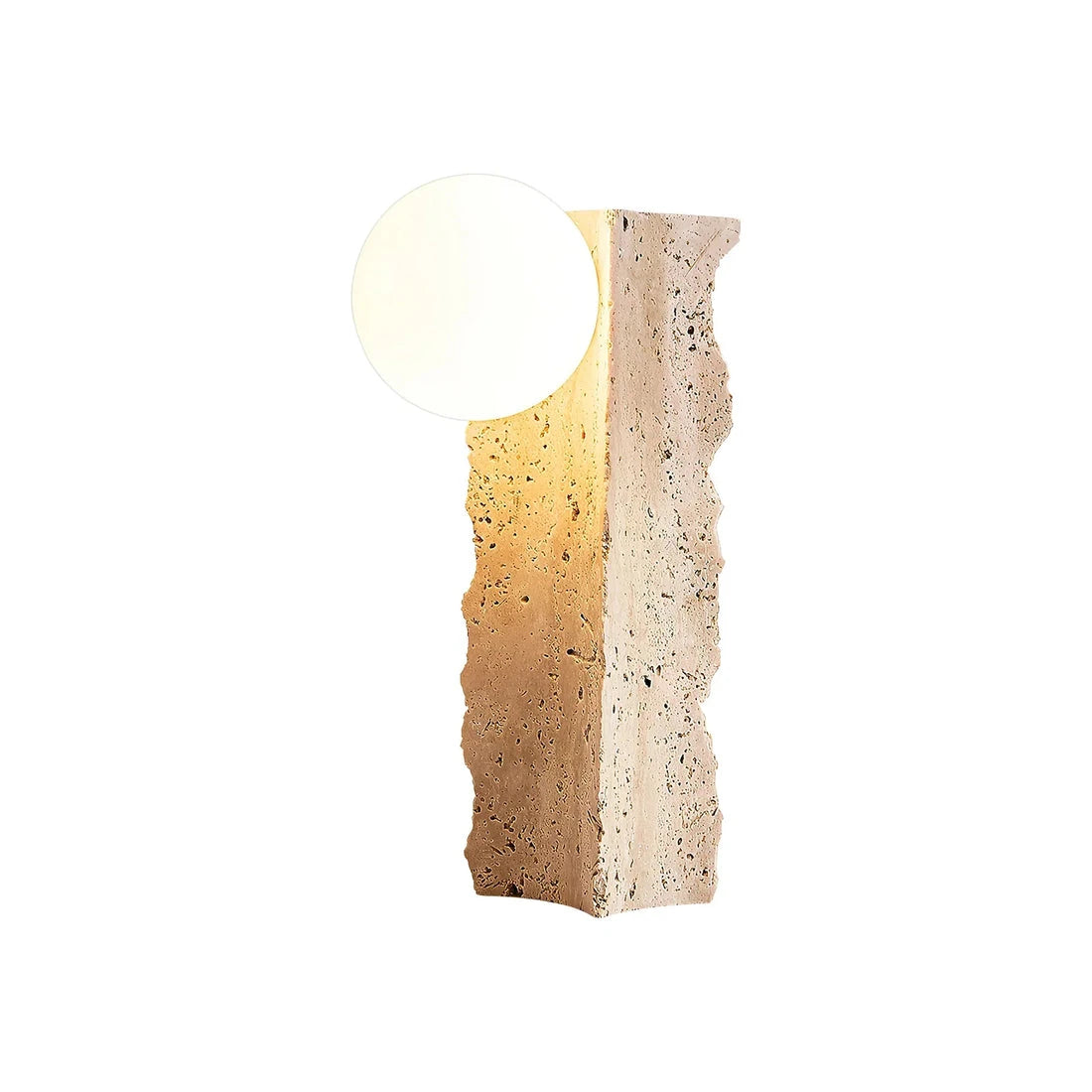
A travertine table lamp is a flexible way to bring natural stone into bedrooms, consoles, and living rooms. Featured product: Travertine Conduit Table Lamp.
Color Temperature: Keep Travertine Warm
Travertine usually looks best with warm white light. A range around 2700K to 3000K tends to flatter the stone, especially if the room has wood, brass, linen, or warm paint. Cooler bulbs can make travertine look gray, dusty, or disconnected from the rest of the room. This is one of the most common reasons a natural stone fixture looks better in product photos than it does after installation.
Brightness matters too. Stone fixtures often have visual weight, so they do not always need high brightness to be noticed. In a bedroom, hallway, or living room, soft output with a dimmer may be more useful than maximum brightness. In a kitchen or dining room, the fixture may need more practical light, but it should still avoid glare. If the light source is too sharp, the beauty of the stone gets lost.
When comparing LED bulbs, look at lumens, color temperature, beam spread, dimming compatibility, and the fixture's recommended bulb type. Watts describe energy use, not perceived brightness. The FTC light bulb shopping guide is a helpful reference for understanding bulb labels, while ENERGY STAR's LED lighting overview explains efficiency and LED performance in plain terms.
Pair Travertine With the Right Finishes
Travertine is easy to pair because it is neutral, but it still has a personality. With oak, it feels relaxed and natural. With walnut, it feels richer and more intimate. With brass, it becomes warmer and more polished. With black metal, it looks more graphic and contemporary. With white walls, it adds texture. With limewash or plaster, it feels almost built-in.
The mistake is pairing travertine with too many similar beige materials and then wondering why the room feels flat. Warm minimalism still needs contrast. If the walls, sofa, rug, curtains, and lamps are all the same beige family, travertine may disappear. Add difference through wood tone, metal finish, black accents, greenery, artwork, or a clearer fabric texture. The room should feel calm, not sleepy.
For a richer lighting plan, use travertine with one companion material. Travertine and brass can work beautifully in dining rooms and hallways. Travertine and walnut suit bedrooms, studies, and living rooms. Travertine and glass can work if you want one fixture to feel grounded and another to feel airy. Compare across Liora Light's pendant lamp collection, chandelier collection, ceiling light collection, and wall lamp collection before deciding.
Do Not Overuse It
Travertine is memorable because it has substance. That also means it can become too much if repeated without a plan. A travertine pendant over the island, travertine sconces in the hallway, a travertine table lamp, travertine coffee table, stone tray, stone floor, and beige walls may sound cohesive, but the room can quickly lose tension.
One strong travertine fixture may be enough in a small room. In a larger home, you can repeat the material across spaces, but vary the scale and role. For example, use travertine pendants in the kitchen, a warmer brass wall sconce in the hallway, and a travertine table lamp in the living room. Or use a travertine ceiling light in a corridor and alabaster sconces in the bedroom. The goal is continuity, not sameness.
If you want help visualizing scale, Liora Light's free 3D drawing service can help before you buy. This is especially useful for stone lighting because dimensions on a product page can feel abstract until you see the fixture against your actual ceiling height, table size, or wall width.
Installation and Practical Checks
Natural stone fixtures deserve a careful installation plan. Check fixture weight, canopy size, junction box position, ceiling or wall structure, voltage, bulb type, and local electrical requirements. A heavier fixture may need additional support. A pendant over a table or island needs proper hanging height and clearance. A wall sconce should not project into a walking path. A ceiling light in a low room should not make the ceiling feel lower.
For hardwired lighting, use a qualified electrician where required. If the fixture will be installed in a bathroom, powder room, covered outdoor area, or other damp location, confirm its rating before purchase. Safety standards matter as much as appearance. UL Solutions provides useful background on lighting safety, and local codes should always be followed.
If you are ordering for a home outside the United States, check voltage and plug requirements before purchase. Liora Light's global voltage reference guide and global plug guide can help avoid practical surprises. For product, shipping, and ordering questions, review the FAQ page.
FAQ
Is travertine lighting good for modern homes?
Yes. Travertine works especially well in modern homes that need warmth and texture. It suits organic modern, warm minimalist, Japandi, Mediterranean, and contemporary interiors because it feels natural without looking overly rustic.
What rooms are best for travertine lights?
Travertine works well in kitchens, dining rooms, bedrooms, hallways, living rooms, entryways, and small transitional spaces. Use pendants over islands or tables, wall lamps in corridors and bedrooms, ceiling lights in low rooms, and table lamps for flexible evening light.
What color temperature is best for travertine lighting?
Warm white light, usually around 2700K to 3000K, is the safest choice. It brings out the warmth of the stone and works well with wood, brass, fabric, plaster, and neutral walls.
Is travertine better than alabaster?
Neither is always better. Travertine feels earthier, more matte, and more architectural. Alabaster is often more translucent and luminous. Choose travertine when the room needs grounded texture, and choose alabaster when the room needs a softer glow.
Can travertine lighting work in a small room?
Yes, but scale is important. A compact wall lamp, table lamp, or ceiling light may work better than a large pendant. Let the stone be a quiet material detail rather than the heaviest object in the room.
Does travertine lighting need a dimmer?
A dimmer is strongly recommended when compatible with the fixture and bulb. Travertine often looks best with softer evening light, and dimming lets the room move between practical brightness and atmosphere.
How do I stop travertine decor from looking too beige?
Add contrast through wood tone, brass, black accents, glass, greenery, textured fabric, or artwork. Travertine should be part of a layered room, not one of many identical beige surfaces.