

This Dining Room Chandelier Size Guide explains how to choose the right chandelier scale, hanging height, width, and visual weight for your dining space. The best size depends on the dimensions of the table, room proportions, ceiling height, fixture shape, and how visually heavy or light the chandelier appears.
The practical starting point is simple: choose a chandelier that is smaller than the table width, hang it low enough to feel connected to the table, and use warm, dimmable light so the room can shift from everyday meals to longer evenings. In most dining rooms, the bottom of the chandelier sits about 30 to 36 inches above the tabletop. For higher ceilings, the fixture can usually rise a little, but it should still feel anchored to the table rather than floating near the ceiling.
This guide walks through dining room chandelier size, table shape, ceiling height, fixture material, bulb warmth, and common mistakes. It is written for homeowners who want a room that feels composed, not over-decorated.
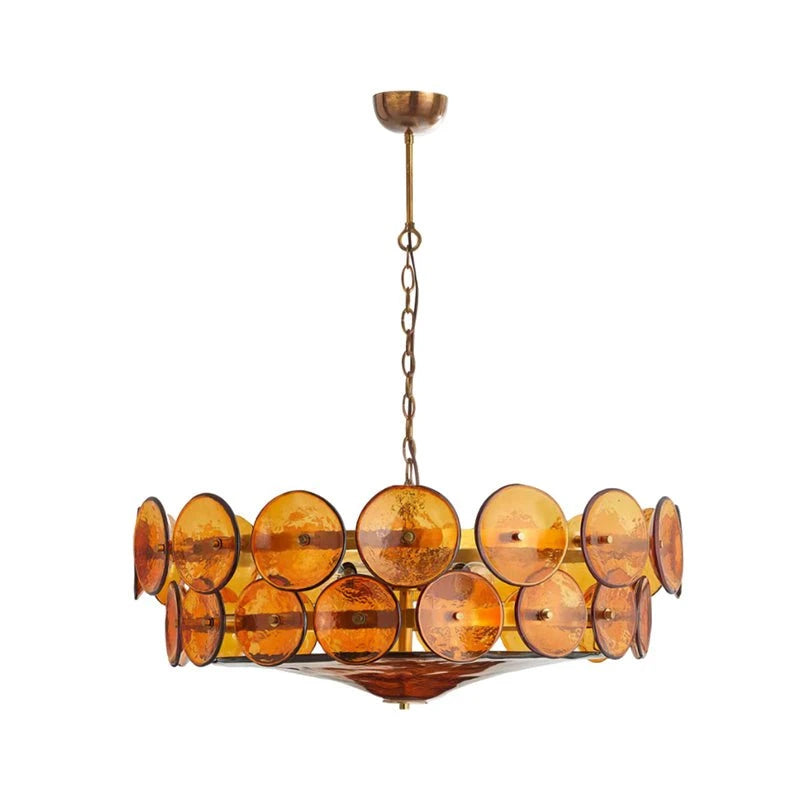
A wide sculptural chandelier can give a dining table the visual weight it needs. Featured product: Lorenzo Murano Chandelier.
Dining Room Chandelier Size Guide: Height and Scale
The chandelier belongs to the table first. The room matters, of course, but a dining fixture that ignores the table usually feels wrong. A long rectangular table needs a different type of presence than a round breakfast table. A narrow antique table cannot carry the same visual weight as a wide stone or oak table. A small room can still take a dramatic fixture if the chandelier relates well to the surface below it.
As a rough guide, the chandelier should usually be narrower than the table by a comfortable margin. If the fixture reaches too close to the table edges, it can look crowded and make seated guests feel boxed in. If it is too small, the room may look unfinished even if the fixture itself is expensive. A chandelier should feel like it was chosen with the table in mind, not simply placed where the electrical box happened to be.
For a broad view of styles, start with Liora Light's chandelier collection and compare shapes against the actual table. If the room is still being planned, the dining room lighting collection is a useful place to look at chandeliers, pendants, and softer companion lighting together.
How Wide Should a Dining Room Chandelier Be?
The safest answer is that the chandelier should feel generous without being wider than the table. Many designers begin by choosing a fixture about one-half to two-thirds the width of the dining table. That range is not law, but it works because it gives the fixture enough presence while leaving visual breathing room around the table edges.
For example, a 42-inch-wide table may look balanced with a chandelier in the 24 to 30 inch range, depending on the fixture shape. A 48-inch-wide table may carry something closer to 30 to 36 inches. A long rectangular table may not need one round fixture at all. It may look better with a linear chandelier, an elongated glass form, or two smaller pendants aligned with the table length.
Pay attention to visual weight, not only measured width. A transparent glass chandelier reads lighter than a dark metal lantern of the same size. A chandelier with thin arms can be wider than a dense drum shade. A cluster of small globes may feel softer than a single heavy shade even when the total diameter is similar.
How High Should a Chandelier Hang Above a Dining Table?
For most dining rooms, 30 to 36 inches from tabletop to the bottom of the chandelier is the best place to start. This keeps the light intimate enough for dining while leaving room for faces, flowers, serving dishes, and conversation. If your ceiling is higher than 8 feet, you can raise the chandelier slightly, but avoid lifting it so much that it feels disconnected from the table.
One of the easiest checks is to sit down at the table. If the chandelier blocks the face of the person across from you, it is too low or too visually dense. If you forget it is there, it may be too high, too small, or too weak. Dining room lighting should be noticeable without getting in the way.
Liora Light's lighting size and installation guide can help with height, drop, and clearance before installation. If the dining area is near an entryway or double-height space, the foyer chandelier guide can also help you think through vertical scale.
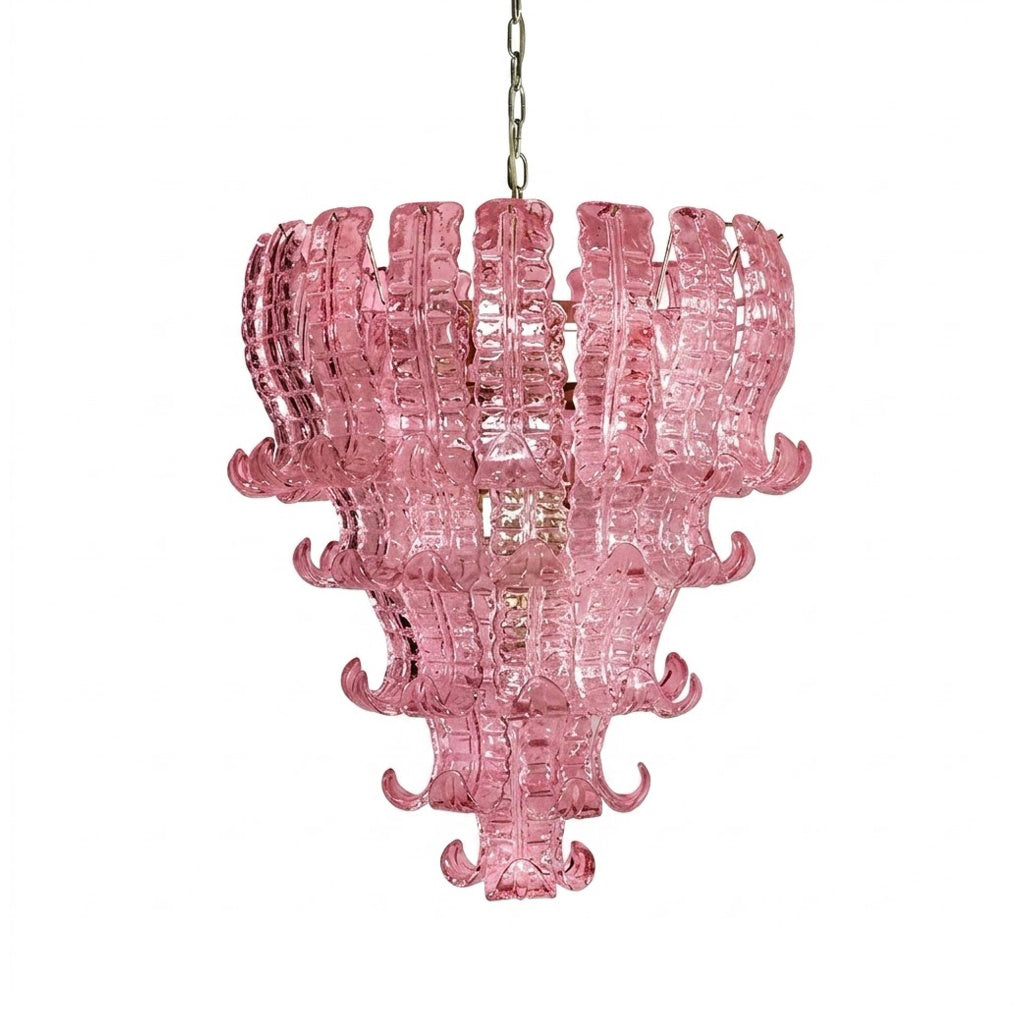
Layered glass can soften the dining room without losing a sense of occasion. Featured product: Pink Ribbon Glass Tiered Chandelier.
Match the Chandelier Shape to the Table Shape
A round table usually wants a fixture with a central form. A round chandelier, globe cluster, tiered glass piece, lantern, or compact sculptural chandelier can all work. The key is symmetry. A round table already creates a social center, and the chandelier should reinforce that center rather than pulling the eye sideways.
A rectangular table usually needs length. One round chandelier can work if the table is not too long, but once the table stretches, a single compact fixture may leave the ends feeling dim and visually unsupported. A linear chandelier, an oval form, two pendants, or a long branching fixture often looks more natural.
An oval table gives you more freedom. It can handle a soft linear fixture, a cluster, or a chandelier with rounded edges. Avoid anything that feels too boxy if the table itself has gentle curves. The fixture should echo or complement the table shape without becoming a copy of it.
Square tables are often overlooked. They can take a square lantern, a round chandelier, or a balanced cluster. The most important thing is that the fixture feels centered and does not create one dominant direction unless the room architecture already supports it.
Material Is the Mood
Chandelier material changes the dining room before the light is even turned on. Glass feels luminous and airy. Brass feels warmer and more established. Black metal feels architectural. Alabaster feels quiet and mineral. Paper feels soft and relaxed. Crystal feels formal, but it can also feel modern when the shape is clean.
If the dining room already has heavy furniture, consider a lighter material such as glass, thin brass, or an open frame. If the room feels too plain, a more sculptural fixture can carry the space. If the room has a lot of hard surfaces, such as stone floors, a glass table, or glossy cabinets nearby, a warmer material can keep the room from feeling cold.
For softer stone and mineral texture, explore alabaster lighting or travertine lighting. For rooms that need sparkle and movement, glass lighting is usually the better starting point. If the room needs a warmer metal note, the brass lighting collection can help connect the chandelier to hardware, frames, or furniture details.
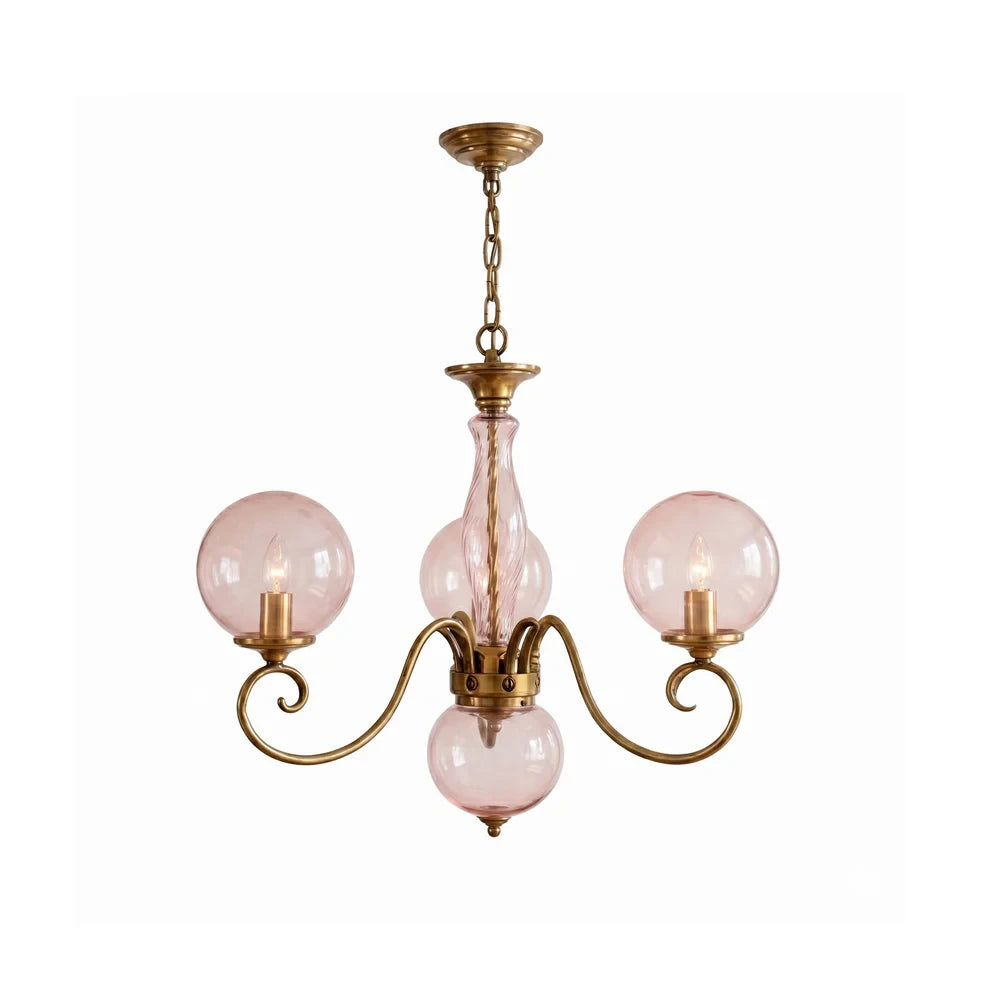
Warm metal works well when a dining room needs softness without losing structure. Featured product: Curved Brass Rose Chandelier.
Choose the Right Light, Not Just the Right Fixture
The most beautiful chandelier can still make a dining room uncomfortable if the bulb is wrong. Dining rooms generally look better with warm light than cool light. Warm white, often around 2700K to 3000K, is flattering to skin, food, wood, brass, stone, and fabric. Cooler light can be useful in task spaces, but at a dining table it often feels too sharp.
Lumens matter too. Watts describe energy use, while lumens describe brightness. If you are comparing modern LED bulbs, look at lumens and color temperature together. The FTC light bulb shopping guide explains how bulb labels describe brightness and appearance. ENERGY STAR also has a helpful LED lighting overview for understanding performance and efficiency.
Dimming is almost always worth it in a dining room. Full brightness may be useful when cleaning, arranging flowers, or setting the table. Dinner usually needs less. A dimmer lets the chandelier support different moods without changing the room. Before buying bulbs or installing a dimmer, check compatibility with the fixture and local electrical requirements. For hardwired fixtures, use a qualified electrician where required.
Think Beyond the Main Chandelier
A chandelier can anchor the dining room, but it should not be the only source of light if the room is used often. Wall sconces, sideboard lamps, picture lights, or nearby floor lamps can keep the room from feeling flat. This matters even more in open-plan homes, where the dining area may sit between the kitchen and living room.
Layered light gives the room depth. The chandelier lights the table. Wall lamps add rhythm at eye level. A small lamp on a console or sideboard makes the room feel warmer after dinner. The Illuminating Engineering Society publishes deeper lighting guidance and standards, but the everyday lesson is simple: rooms feel better when light comes from more than one height.
If the dining room is connected to a living space, browse living room lighting and wall lamps at the same time. The goal is not to match everything. The goal is to create a family of materials, shapes, and warmth that feels consistent from one area to the next.
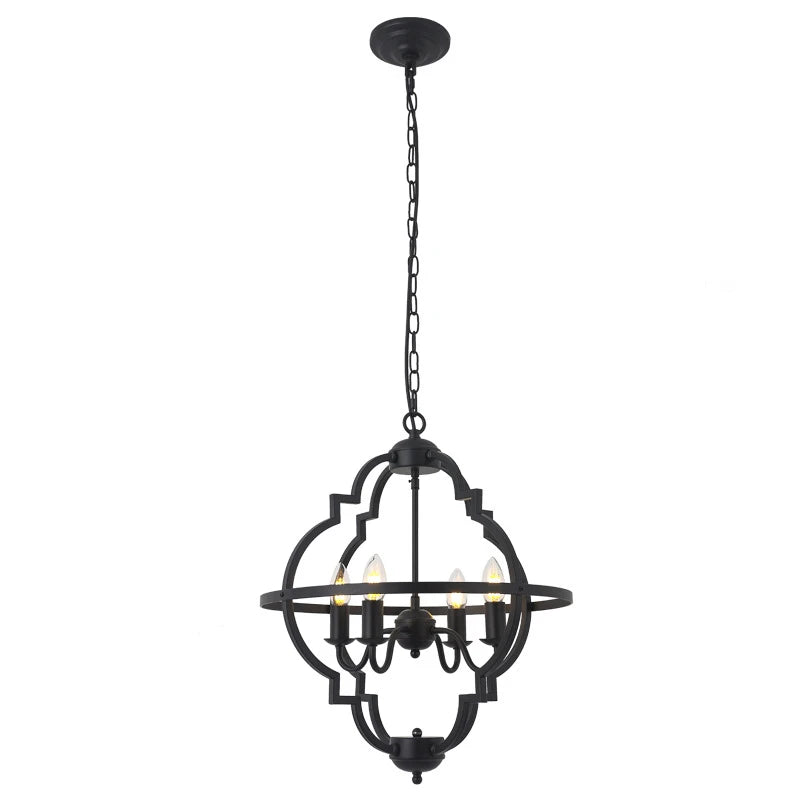
An open-frame chandelier can give a dining room shape without making the ceiling feel heavy. Featured product: Quatrefoil Cage Chandelier.
Common Dining Room Chandelier Mistakes
The most common mistake is choosing a chandelier that is too small. A small fixture can make a good dining table look lonely. If the room feels unfinished after the chandelier goes up, scale is often the reason.
The second mistake is hanging it too high. A chandelier that floats close to the ceiling may light the room, but it does not always light the dining experience. Lower placement helps the fixture relate to the table and makes the room feel more intimate.
The third mistake is choosing an exposed bulb fixture without thinking about glare. A bare bulb can look elegant in photos and harsh at dinner. Frosted bulbs, lower output, dimming, or a diffusing shade can make a huge difference.
The fourth mistake is matching every finish too perfectly. A brass chandelier does not require brass chairs, brass cabinet pulls, and brass picture frames. Repetition is helpful, but a room should not feel as if everything came from the same set.
The fifth mistake is ignoring installation details. Check the canopy diameter, ceiling box location, fixture weight, chain or rod length, bulb access, dimmer compatibility, voltage, and local code. If you are buying for a home outside your usual market, Liora Light's global voltage reference guide and global plug guide are worth checking before ordering.
A Practical Chandelier Planning Method
Here is a simple way to choose with more confidence.
First, measure the table width and length. Second, decide whether the table needs a central chandelier, a linear chandelier, or two pendants. Third, choose a fixture that leaves comfortable space inside the table edges. Fourth, check the hanging height while seated, not only while standing. Fifth, choose the material based on the room's mood. Sixth, plan warm bulbs and dimming before installation. Seventh, consider secondary lighting so the chandelier does not have to do every job.
If the room has an unusual ceiling height, an offset junction box, a long table, or a fixture with strong visual weight, use a layout check before ordering. Liora Light's free 3D drawing service can help you see proportion before the fixture is installed.
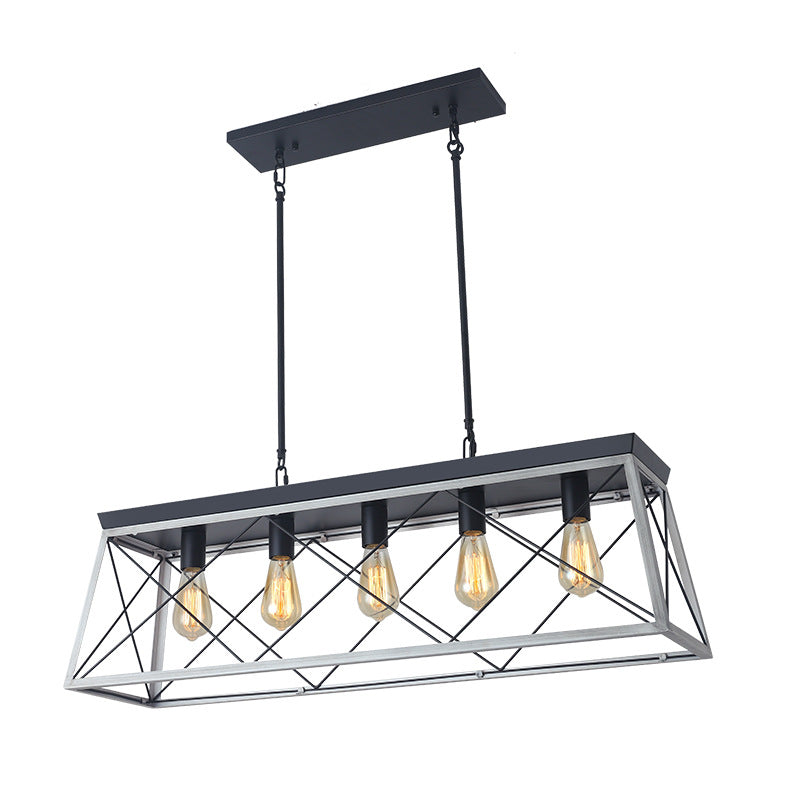
Linear fixtures can work over rectangular dining tables as well as kitchen islands. Featured product: 5-Light Linear Island Chandelier.
Final Thought
A dining room chandelier is not only a decorative object. It is the piece that tells the table where it belongs. When the scale is right, the room feels settled. When the height is right, conversation feels easy. When the light is warm and dimmable, the same room can handle weekday meals, holidays, quiet breakfasts, and long dinners without feeling forced.
Start with the table, then check the room. Choose a chandelier with enough presence, keep it comfortable at eye level, and let the material support the mood you want. Good dining room lighting should feel intentional before anyone sits down and even better once they do.
FAQ
What size chandelier should I choose for a dining room table?
A common starting point is to choose a chandelier about one-half to two-thirds the width of the dining table. The fixture should feel substantial, but it should usually remain comfortably inside the table edges.
How high should a chandelier hang over a dining table?
In many dining rooms, the bottom of the chandelier hangs about 30 to 36 inches above the tabletop. Raise it slightly for higher ceilings, but keep it visually connected to the table.
Can a chandelier be wider than the dining table?
Usually no. A chandelier that is wider than the table can feel crowded and may look awkward from seated positions. There are exceptions with very light or open fixtures, but most rooms look better when the chandelier is narrower than the table.
What chandelier shape works best for a rectangular table?
Rectangular tables often work best with linear chandeliers, elongated fixtures, oval forms, or two pendants. A single round chandelier can work on a shorter rectangular table, but long tables usually need more horizontal presence.
What color temperature is best for dining room lighting?
Warm white light, often around 2700K to 3000K, is usually best for dining rooms. It is more flattering for food, faces, wood, fabric, brass, and stone than very cool white light.
Should a dining room chandelier be dimmable?
Yes. Dimming is one of the most useful features in a dining room because the same fixture needs to support cleaning, setting the table, casual meals, and softer evening dinners.
Do I need other lights if I already have a chandelier?
Often yes. A chandelier anchors the table, but wall lamps, sideboard lamps, or nearby accent lighting make the room feel deeper and more comfortable. Layered lighting usually looks more refined than one bright overhead source.