

Antique brass lighting has a quality that many modern finishes struggle to reproduce: it makes a room feel established rather than newly decorated. The warmth of aged brass, the sparkle of cut crystal and the familiar proportions of candle-style chandeliers can introduce character without forcing an interior into a strictly traditional style.
That distinction matters when choosing lighting for a real home. A large antique brass chandelier may look magnificent in a photograph, but scale, ceiling height and furniture placement determine whether it will actually work in a dining room or foyer. A clear-glass brass pendant light can provide a lighter alternative when the architecture cannot support a large chandelier. And a pair of crystal wall sconces can create an entirely different layer of light in a bedroom, hallway or dining space.
The best lighting plan therefore does not begin with the question, “Which fixture is the most impressive?” It begins with a more practical question: what should the light do for the room?
This guide explains how to use antique brass and crystal lighting throughout the home, including how to choose scale, where different fixtures work best, how to coordinate finishes and why chandeliers, pendant lights and wall sconces should be treated as different layers of the same lighting scheme.
How to Choose Antique Brass & Crystal Lighting for Your Home
Brass has been used in decorative interiors for generations, but not every brass finish creates the same effect. Highly polished brass can appear bright and formal, while antique brass lighting usually has a softer, deeper tone. That reduced reflectivity allows the metal to sit more naturally beside wood, stone, linen, plaster and other materials commonly used in residential interiors.
This is one reason antique brass works particularly well in transitional homes. Transitional design sits between traditional detailing and contemporary restraint. Instead of filling the room with heavily ornamented furniture, designers often use one or two historical references — a brass chandelier, arched mirror or classic molding — against a simpler architectural background.
In that setting, vintage brass lighting provides visual history without making the entire house feel like a period interior.
Antique Brass With Warm Wood
Walnut, oak and other warm woods are natural companions for antique brass. Both materials contain warm undertones, but their surfaces behave differently: timber absorbs light while brass catches it. Used together, they create depth without requiring strong color.
Antique Brass With Neutral Walls
Cream, warm white, taupe and soft gray walls allow an antique brass fixture to stand out without producing harsh contrast. This combination works particularly well when the light includes clear glass or crystal, because the fixture remains visually detailed while the room stays calm.
Antique Brass With Dark Colors
Deep green, navy, charcoal and dark timber can make brass appear richer. In a dining room or library, this combination creates a more dramatic atmosphere, particularly when the brass is illuminated by warm light rather than cool-white LEDs.
Crystal Lighting Is About More Than Sparkle
People often describe a crystal chandelier simply in terms of sparkle, but crystal also changes how light is distributed throughout the room. Multiple crystal drops, beads or prisms create many small reflective surfaces. Instead of viewing only the bulbs, the eye sees layers of highlights extending below and around the structure of the fixture.
This makes crystal especially useful when a large chandelier needs visual volume without becoming a completely solid object.
A metal-only chandelier of the same dimensions can appear heavier because its silhouette is defined by opaque material. Crystal adds density while still allowing the background of the room to remain visible through the fixture.
That quality is particularly valuable in foyers, dining rooms and larger living spaces where the chandelier should feel substantial without blocking the architecture behind it.
1. Choosing an Antique Brass Crystal Chandelier for a Large Room
A large chandelier has more influence on the proportions of a room than almost any other decorative object. Unlike furniture, which sits at eye level or below, a chandelier occupies open space and is usually visible from several directions.

The Antique Brass Empire Crystal Chandelier combines an architectural brass frame with multiple tiers of crystal and candle-style lights.
The Antique Brass Empire Crystal Chandelier illustrates why proportions become especially important with large statement fixtures. Its tall central structure, curved arms and hanging crystal elements create both horizontal and vertical volume.
This type of chandelier needs breathing room. Installing it in a space that is too small can make the ceiling feel crowded, whereas placing it in a generous room allows the individual arms and crystal drops to be read clearly.
Where a Large Empire Chandelier Works Best
- Formal dining rooms
- Large living rooms
- Double-height entrance halls
- Stair halls and grand foyers
- Hotel-inspired residential interiors
- Rooms with higher ceilings and substantial furniture
One mistake homeowners frequently make is choosing chandelier size according to the overall floor area alone. Furniture scale matters just as much. A room containing a long dining table, large sideboard and substantial chairs can support a stronger chandelier than an equally large room furnished more sparsely.
How to Size a Dining Room Chandelier
When choosing a dining room chandelier, the dining table should usually be the primary reference point. This creates a visible relationship between the light and the furniture directly below it.
A chandelier that is too small can look disconnected from a large table. A chandelier that is excessively wide may overwhelm the table and reduce visual space around the fixture.
Instead of relying on one universal formula, consider four factors together:
- Dining table width and length
- Ceiling height
- Overall fixture height
- Visual density of the chandelier
Visual density is particularly important with crystal fixtures. Two chandeliers may have identical outer dimensions but feel completely different if one uses a lightweight open frame and another contains hundreds of crystal elements.
The eye responds to perceived mass, not just measurements.
How High Should a Chandelier Hang Above a Dining Table?
The chandelier should hang low enough to feel connected to the dining table but high enough to preserve clear sight lines between people seated opposite one another.
For many standard-height rooms, designers often begin around 30–36 inches above the tabletop and then adjust according to ceiling height, fixture proportions and personal preference. Taller ceilings may justify additional height.
This should be treated as a starting point rather than an absolute rule. A tall empire chandelier behaves very differently from a shallow linear pendant even if both are installed above the same table.
The complete fixture — not only its lowest crystal — should visually belong to the dining zone.
2. When a Brass Globe Pendant Is Better Than a Large Chandelier
Not every dining room or entryway needs a large crystal fixture. In many contemporary homes, a smaller antique brass pendant light creates a better balance.
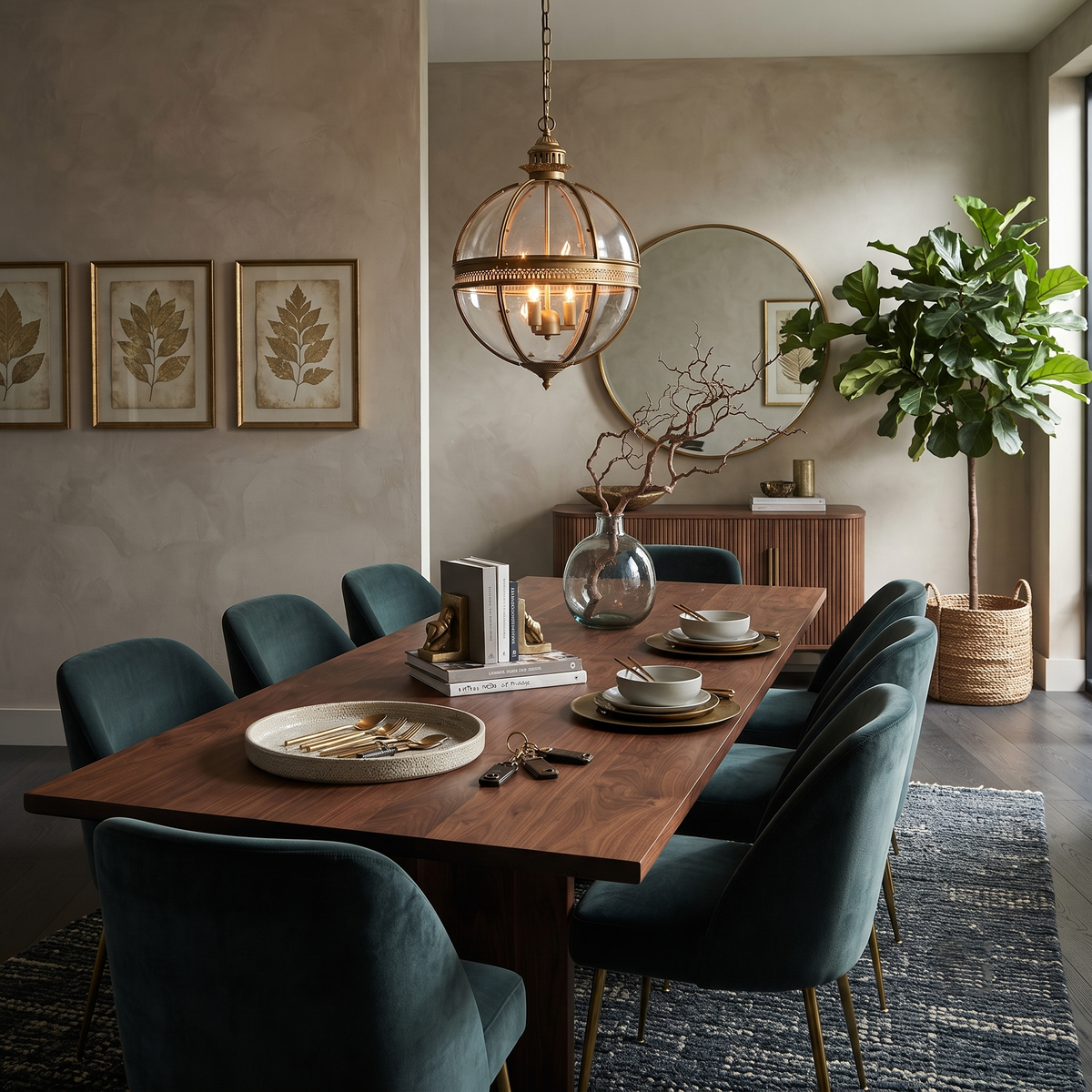
The Antique Brass Globe Pendant uses clear glass and a brass-toned frame to create a lighter visual profile above a dining table.
The Antique Brass Globe Pendant takes a different approach from a traditional crystal chandelier. Its clear curved glass allows the room behind the fixture to remain visible, while the antique brass framework defines its shape.
That makes a globe pendant useful when the room needs a decorative ceiling light but cannot visually support a large chandelier.
Ideal Places for a Brass Globe Pendant
- Dining rooms with standard ceiling heights
- Breakfast rooms
- Kitchen dining areas
- Entryways
- Hallways
- Smaller foyers
- Rooms where the view through the fixture should remain open
Clear glass also makes the light source more visible, so bulb choice becomes part of the design. Decorative candle-style bulbs or suitably proportioned LED bulbs usually make more visual sense than oversized utilitarian lamps inside a transparent fixture.
Crystal Chandelier vs. Glass Globe Pendant: Which Should You Choose?
ConsiderationCrystal ChandelierGlass Globe Pendant Visual ImpactStrong statementMore restrained Best Room SizeMedium to large roomsSmall to medium rooms StyleTraditional, transitional, luxuryTransitional, vintage, contemporary classic Light AppearanceLayered reflection and sparkleClear, open illumination Best ApplicationDining rooms and large foyersDining areas and smaller entryways
Neither is automatically more luxurious. The right choice depends on the architecture around it.
A large crystal chandelier looks sophisticated when the room gives it enough visual space. The same chandelier squeezed into a low-ceilinged room may look excessive. Conversely, a beautifully proportioned glass globe pendant can feel much more refined when it relates correctly to the furniture and ceiling height.
3. Using Brass and Crystal Wall Sconces to Create a Second Lighting Layer
A ceiling fixture provides light from above, but an interior illuminated exclusively from the ceiling can feel flat. This is why wall lighting is so important in bedrooms, dining rooms, hallways and entry spaces.
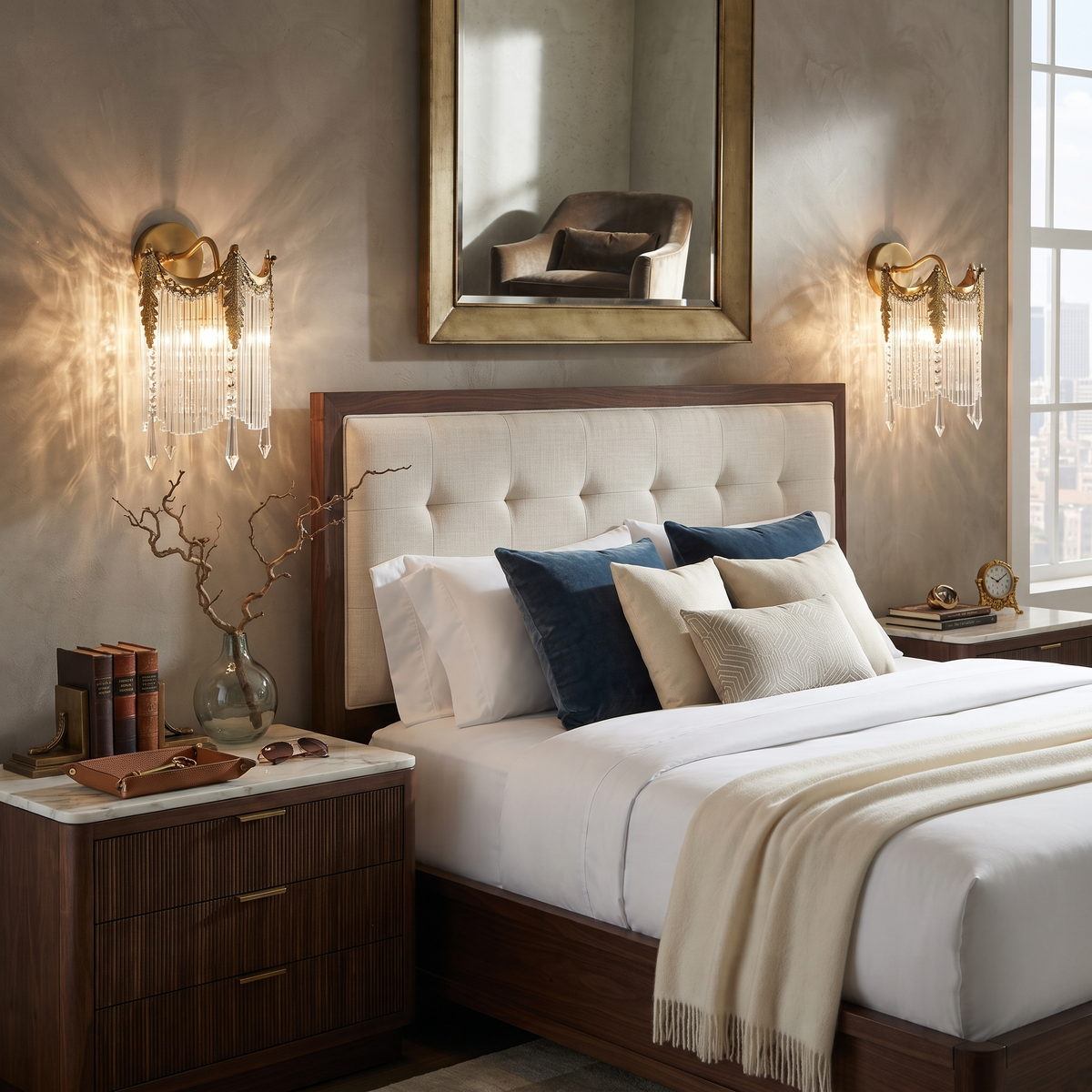
The Brass and Crystal Fringe Sconce combines warm brass with vertical crystal prisms to create decorative light closer to eye level.
The Brass and Crystal Fringe Sconce demonstrates how the same material language used in a chandelier can be translated to a smaller architectural scale.
Rather than competing with the ceiling light, a wall sconce should normally complement it. Brass establishes continuity between fixtures, while crystal provides a smaller repetition of the reflective material used elsewhere in the room.
Why Wall Sconces Work So Well in Bedrooms
Bedrooms are particularly suited to crystal wall sconces because most people do not want to rely on bright overhead lighting immediately before sleep.
A pair of decorative sconces beside the bed can create a lower and more intimate layer of illumination. They also free bedside tables from large lamp bases, which is useful when nightstands are small.
Symmetry is important here. Rather than measuring the wall independently, position the sconces in relation to the headboard, nightstands and mattress height.
The bed is the visual center of the composition.
Use Matching Sconces When You Want Formal Balance
Two identical sconces placed symmetrically on either side of a bed produce a more architectural appearance. This works particularly well with upholstered headboards, dark wood nightstands and traditional or transitional bedrooms.
Use a Single Sconce as a Decorative Accent
A single wall light can work beside artwork, a hallway console or an architectural opening where symmetry is unnecessary. In this situation, the sconce becomes more like illuminated jewelry for the wall.
Using Antique Brass Lighting Throughout the Home Without Making Everything Match
There is no need to install the same fixture in every room. In fact, doing so can make a home feel more like a showroom than a naturally developed interior.
A better strategy is to repeat a material or finish while changing the fixture type.
For example, a home could use:
- An antique brass crystal chandelier in the main dining room
- A clear glass antique brass globe pendant in the breakfast area
- Brass and crystal wall sconces in the bedroom
The fixtures are different, but antique brass connects them visually.
This creates consistency without repetition.
How Antique Brass Lighting Works With Modern Interiors
Antique brass does not require ornate furniture. In fact, some of the strongest interiors combine traditional lighting with relatively simple contemporary furnishings.
A brass chandelier can sit above a clean rectangular walnut dining table. Crystal wall lights can flank a plain upholstered headboard. A globe pendant can hang in front of minimal plaster walls.
The contrast is useful because the lighting provides detail while the architecture provides calm.
If every object in the room is decorative, the eye has nowhere to rest. When the furniture and walls are simpler, an ornate chandelier becomes a deliberate focal point instead of one decorative object competing with many others.
Traditional vs. Transitional Lighting: Understanding the Difference
Traditional lighting typically draws more directly from historical decorative forms. Candle-style arms, crystal cascades, ornamental brasswork and symmetrical layouts are common.
Transitional lighting keeps some of those references but simplifies the overall appearance.
The Antique Brass Empire Crystal Chandelier leans toward a more classical statement because of its multiple tiers and candle-style structure.
By contrast, the Antique Brass Globe Pendant uses a cleaner circular geometry that allows it to work comfortably in transitional interiors.
The material may be similar, but proportion and structure determine the final style.
Choosing the Right Bulb for Antique Brass and Crystal Lighting
The color of the light source can significantly change how brass and crystal appear.
Warmer light generally strengthens amber and gold tones in antique brass. It can also give clear crystal a softer and more residential appearance.
Cooler light creates stronger contrast and can make brass appear less warm. This may work in some contemporary settings, but inconsistent color temperature between chandeliers, wall lights and recessed ceiling lighting can make a room feel visually fragmented.
For information about the efficiency and operating characteristics of modern LED lighting, homeowners can consult the U.S. Department of Energy LED lighting guide.
Always confirm the socket type, maximum wattage and dimming compatibility specified for the individual fixture before selecting bulbs.
Why Dimming Matters in Dining Rooms and Bedrooms
Decorative lighting serves different purposes at different times of day. A dining room may require stronger illumination while a table is being set but much softer lighting during dinner. A bedroom needs enough light for general use while also benefiting from lower illumination at night.
When the fixture and bulb configuration support dimming, a compatible dimmer can make the same chandelier or wall sconce perform several different roles.
This is particularly useful with crystal because lowering the output can shift attention away from raw brightness and toward the reflections created within the crystal elements.
Think About Ceiling Height Before Buying a Chandelier
Photographs can make chandelier scale difficult to judge. A tall fixture photographed in a large interior may appear surprisingly compact online.
Always check both diameter and overall fixture height.
For suspended fixtures, also consider:
- Ceiling canopy height
- Fixture body height
- Chain or rod length
- The lowest decorative crystal element
- Required clearance beneath the chandelier
A chandelier's usable hanging range is often more important than diameter when working with unusual ceiling heights.
What About Sloped Ceilings?
Sloped ceilings require additional attention because the suspension system has to accommodate the angle correctly.
Do not assume that every pendant or chandelier can automatically be installed on a sloped ceiling simply because it uses a chain.
Check the mounting system and product specifications first, and consult a qualified installer where necessary.
What to Check Before Ordering Antique Brass Lighting
Before purchasing a chandelier, pendant or wall light, confirm the practical specifications as carefully as the appearance.
Check Fixture Dimensions
Use actual measurements rather than estimating size from photographs. If necessary, mark the diameter with removable tape or cardboard in the intended installation area.
Check Electrical Requirements
Confirm voltage, socket type, bulb quantity, maximum wattage and installation method.
Check Suspension Length
For chandeliers and pendants, determine the finished hanging height before installation.
Check Wall Projection
For sconces, depth is particularly important in hallways, beside beds and other areas where people regularly pass the fixture.
Check Installation Requirements
Larger chandeliers may require more substantial ceiling support than lightweight pendant fixtures.
For information concerning lighting safety and luminaire standards, professional buyers and homeowners can also consult UL Solutions.
Three Antique Brass Lighting Options for Different Rooms
Lighting FixtureBest LocationDesign Role Antique Brass Empire Crystal Chandelier Dining room, large foyer, living room Large statement chandelier with strong vertical presence Antique Brass Globe Pendant Dining area, breakfast room, entryway Open, lighter alternative to a traditional chandelier Brass and Crystal Fringe Sconce Bedroom, hallway, dining room, entryway Decorative wall lighting and lower-level ambient illumination
Building a Complete Lighting Scheme Instead of Choosing Fixtures One by One
The most successful homes rarely depend on a single spectacular fixture. A chandelier may establish the main focal point, but wall lights, table lamps, floor lamps and architectural lighting determine whether the room remains comfortable after the chandelier is dimmed.
Think of lighting vertically.
Ceiling lights occupy the highest layer. Wall sconces sit closer to eye level. Table and floor lamps create lower pools of illumination around furniture.
When these levels are combined, a room gains depth.
For example, the Antique Brass Empire Crystal Chandelier could establish the primary decorative statement in a dining room, while Brass and Crystal Fringe Sconces provide a softer perimeter layer.
In another part of the home, the Antique Brass Globe Pendant can repeat the brass finish without repeating the chandelier itself.
That is a much more natural way to create continuity throughout a home.
Frequently Asked Questions About Antique Brass and Crystal Lighting
Is antique brass lighting still in style?
Yes. Antique brass remains useful because it sits between polished traditional brass and darker contemporary metals. It works particularly well in transitional interiors where homeowners want warmth and historical character without making the entire room feel traditionally decorated.
What rooms are best for an antique brass chandelier?
Antique brass chandeliers work particularly well in dining rooms, living rooms, foyers and stair halls. Large crystal chandeliers generally need more visual and vertical space, while smaller brass chandeliers can work in standard residential rooms.
How do I choose between a chandelier and a pendant light?
Choose a chandelier when the room needs a strong decorative focal point and has sufficient visual space. Choose a pendant when you want a lighter fixture, a smaller scale or a more open view through the room.
Can antique brass lighting work in a modern home?
Yes. Antique brass often becomes more interesting when paired with contemporary furnishings. Clean walls, simple furniture, natural stone and warm wood allow a detailed brass fixture to act as the decorative focal point without making the entire room traditional.
Are crystal chandeliers only suitable for formal interiors?
No. Crystal can also work in transitional interiors. The surrounding furniture, architecture and metal finish have a major influence on whether the fixture feels formal, vintage or contemporary.
What color temperature works best with antique brass?
Warm-white lighting generally complements the golden and brown undertones of antique brass particularly well. The final choice should also coordinate with the other light sources in the room so that chandeliers, sconces and recessed lighting do not appear noticeably different in color.
Can crystal wall sconces be used beside a bed?
Yes. A matching pair of crystal wall sconces can frame a headboard and create a lower layer of ambient light while freeing space on bedside tables. Position them according to the bed and headboard rather than simply measuring from the corners of the wall.
How large should a dining room chandelier be?
There is no single size that works for every room. Consider the width of the dining table, ceiling height, overall chandelier height and visual density of the fixture. A highly detailed crystal chandelier often appears visually larger than a simpler open-frame fixture with the same measured diameter.
Can I mix different antique brass lights in the same home?
Yes. Repeating the antique brass finish while changing fixture types is often more sophisticated than using exactly the same design everywhere. A chandelier, globe pendant and wall sconce can belong to the same home without looking like a matching furniture set.
What should I check before buying a large crystal chandelier?
Check the diameter, overall fixture height, suspension range, ceiling structure, electrical specifications, bulb requirements and installation access. For large fixtures, confirming ceiling support before installation is particularly important.
Final Thoughts: Let the Room Decide the Fixture
The best antique brass lighting is not necessarily the largest, most ornate or most expensive fixture. It is the one whose scale, material and light distribution make sense for the room around it.
A large antique brass crystal chandelier can give a dining room or foyer architectural presence. A brass globe pendant can provide a lighter interpretation of the same material language. And brass and crystal wall sconces can carry that character into bedrooms and smaller spaces.
Instead of trying to make every fixture match, aim for continuity in materials, proportions and light quality. That approach produces a home that feels collected and intentional rather than decorated around a single lighting trend.
Explore more residential and decorative lighting at Liora Light and compare fixture dimensions, materials and installation requirements before choosing the right lighting for your space.