

Kitchen Island Pendant Lighting needs to balance proportion, visibility, task lighting, and the way the kitchen connects with the surrounding space. The right pendant height and spacing depend on island size, ceiling height, fixture scale, sightlines, and how the island is actually used. As a general starting point, pendant lights are often positioned about 30 to 36 inches above the countertop, but the final placement should be adjusted to the room rather than following a single fixed rule.
This guide is written for real homes rather than perfect renderings. It covers pendant height, spacing, fixture size, linear chandeliers, warm light, materials, and the small installation details that separate a well-planned kitchen from one that looks almost right.
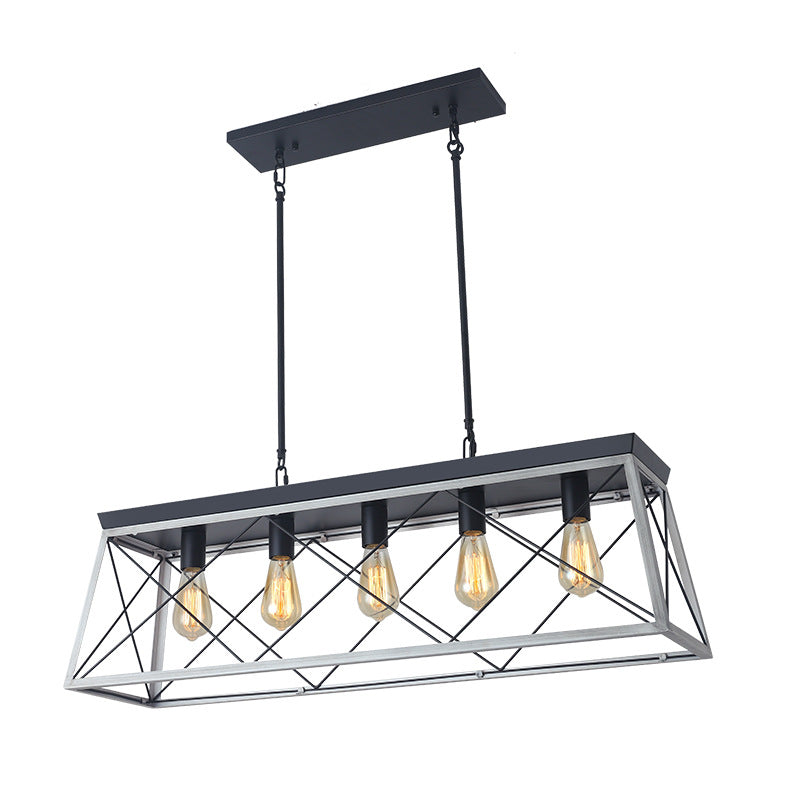
For long islands, a single linear fixture can feel cleaner than several small pendants. Featured product: 5-Light Linear Island Chandelier.
Kitchen Island Pendant Lighting Height and Spacing
Many people begin by asking, "How high should I hang pendant lights over a kitchen island?" It is a useful question, but it is not the first one. Start with the island itself. Its length, width, countertop finish, seating arrangement, and relationship to the rest of the room will tell you what kind of light belongs there.
A narrow island with two stools may only need two quiet pendants. A long working island may need three pendants, a linear island chandelier, or a row of smaller shades. A deep island with seating on one side and prep space on the other may need broader light distribution than a slim breakfast counter. If the kitchen opens into the living room, the fixture also becomes part of the furniture composition, not just a task light.
Think of island lighting as a bridge between function and atmosphere. It should help you see the counter clearly, but it should also make the island feel like a place to gather. That balance is why Liora Light's kitchen lighting and pendant lamp collections include both practical silhouettes and softer decorative forms.
Kitchen Island Pendant Height: The Practical Range
For many kitchens, the most workable hanging height is about 30 to 36 inches from the countertop to the bottom of the pendant shade. This range keeps the light low enough to feel connected to the island, but high enough to avoid blocking faces across the counter. In rooms with taller ceilings, you may be able to lift the fixture slightly or choose a taller shade. In rooms with lower ceilings, you may need a shallower pendant or a linear fixture with a slimmer profile.
Do not measure only once. Stand where people will actually stand. Sit at the island. Look from the sink toward the room. Look from the living area back into the kitchen. If the shade cuts across eye level, the pendant is probably too low or too bulky. If the light feels detached from the island, it may be too high or too small.
Liora Light's kitchen island ceiling guide is useful for double-checking ceiling height, fixture scale, and placement before installation. For broader measurements, the lighting size and installation guide can help you compare pendant drops, chandelier widths, and room proportions.
How Many Pendant Lights Should Go Over an Island?
The answer depends on the island length and the visual weight of the fixture. Two large pendants can look more intentional than three small ones if the island is medium length. Three pendants can work beautifully on a long island, especially when each shade has a narrow profile. A single linear chandelier can be the best choice when the island is long, the ceiling is clean, or the kitchen already has a lot of cabinet detail.
As a design rule, leave breathing room at the ends of the island. Pendants that hang too close to the edge can make the island feel crowded and can create awkward shadows near seating. The spacing between pendants should feel even, but it does not have to be mathematically rigid if the fixture itself has an organic shape.
If you are choosing between two and three pendants, look at the island from the widest view in the room. In a small kitchen, three fixtures can feel busy. In a large open-plan space, two tiny pendants may look underpowered. The island should feel finished, not decorated as an afterthought.
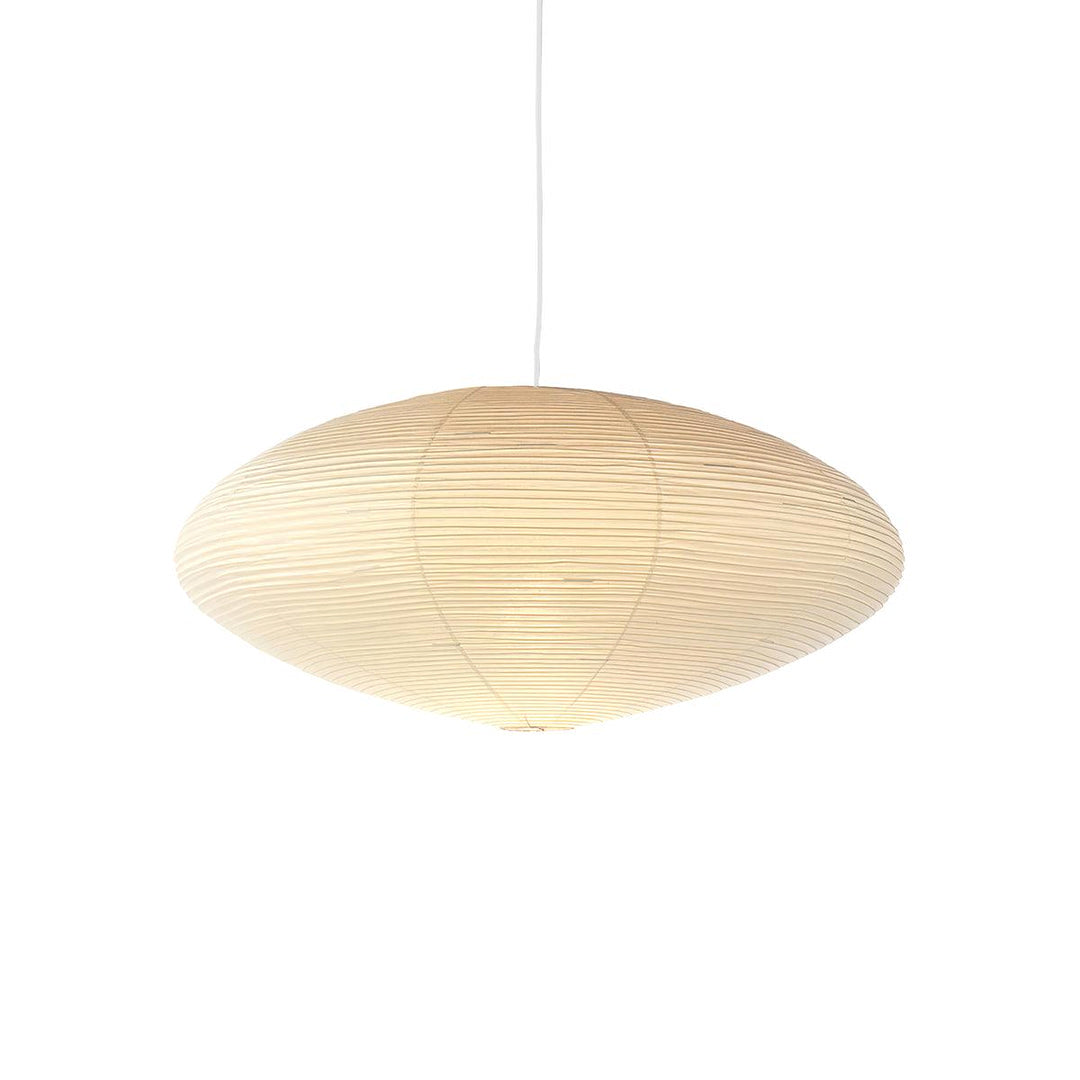
A soft paper pendant can warm up stone counters, pale cabinetry, and quiet modern kitchens. Featured product: Akari 15A 21A 26A Pendant Light.
Linear Chandelier or Individual Pendants?
A linear island chandelier works well when you want one clean visual gesture. It is especially useful above longer islands, in modern kitchens with strong horizontal lines, or in homes where the kitchen is visible from the dining and living areas. Because the fixture reads as one piece, it can keep the ceiling from feeling cluttered.
Individual pendants give more rhythm. They can soften a kitchen with straight cabinets, repeat a shape used elsewhere, or make a large island feel more human in scale. Pendants are also easier to adjust visually because the empty space between them becomes part of the design.
Choose a linear chandelier if the island is long, the ceiling is already busy, or the kitchen needs a stronger architectural line. Choose individual pendants if you want more softness, more repetition, or a relaxed layered look. For more statement options, browse chandeliers; for single-drop forms, start with pendant lamps.
Material Changes the Mood More Than People Expect
The same island can feel completely different under glass, paper, metal, alabaster, or fabric. This is why material should not be left until the end.
Glass is crisp, reflective, and visually light. Clear glass can make a small kitchen feel open, but it can also expose the bulb, so glare control matters. Frosted, ribbed, or textured glass is more forgiving and usually more comfortable over a surface where people sit.
Paper shades create a soft glow and work beautifully in kitchens that lean warm, minimal, Japandi, or mid-century. They are less about sparkle and more about calm. If your kitchen has white oak, honed stone, warm walls, or matte cabinetry, a paper pendant can keep the space from feeling hard.
Metal gives structure. Black metal can sharpen a pale kitchen. Brass can bring warmth to white marble, cream stone, or dark wood. The trick is to repeat the metal only where it feels useful. A brass pendant does not require every hinge, faucet, and handle in the room to match.
Stone lighting, such as alabaster or travertine, feels more permanent and architectural. It can be beautiful near a kitchen that already has stone counters, plaster walls, or natural wood. For adjacent spaces such as breakfast nooks and passageways, Liora Light's alabaster lighting and travertine lighting collections can help continue the material story beyond the island.

Paper and sculptural shades are useful when a kitchen needs softness rather than more shine. Featured product: Japanese Paper Pendant Lamp Akari D Series.
Brightness, Bulbs, and Warmth
Kitchen island lighting should not be judged by fixture shape alone. The bulb or integrated LED determines whether the counter feels practical, flattering, or harsh. Lumens describe brightness, while watts describe energy use. For modern LED lighting, lumens are the better way to compare output. The FTC guide to shopping for light bulbs explains how labels describe brightness and light appearance.
Color temperature matters just as much. Many homes look best when kitchen island pendants stay around warm white or soft neutral white, often around 2700K to 3000K depending on the room. Very cool bulbs can make marble, quartz, and white cabinetry feel clinical. Very warm bulbs can look beautiful at dinner but may be less practical for food prep. If the kitchen also has under-cabinet lighting, try to keep the color temperature consistent so the island does not look yellow while the counters look blue.
Dimming is worth planning before installation. A kitchen island needs different light at 7 a.m. and 9 p.m. Full brightness is helpful for cooking and cleanup. Lower light is better when the kitchen becomes part of the evening living space. ENERGY STAR's LED lighting overview is a useful reference when comparing LED performance, efficiency, and dimming considerations.
Watch the Sightline From the Next Room
Open kitchens create one extra challenge: the island fixture is rarely seen from only one angle. It may be visible from the sofa, dining table, hallway, or front door. A pendant that looks perfect when you stand at the island may look too low from the living room. A linear chandelier that feels restrained from one side may feel too heavy from another.
This is where a wider fixture can be safer than a deep one. Long, shallow forms often preserve the view across the room. Tall lanterns, large domes, and dense clusters need more ceiling height and more visual breathing room. If you want drama, make sure the rest of the kitchen can hold it.
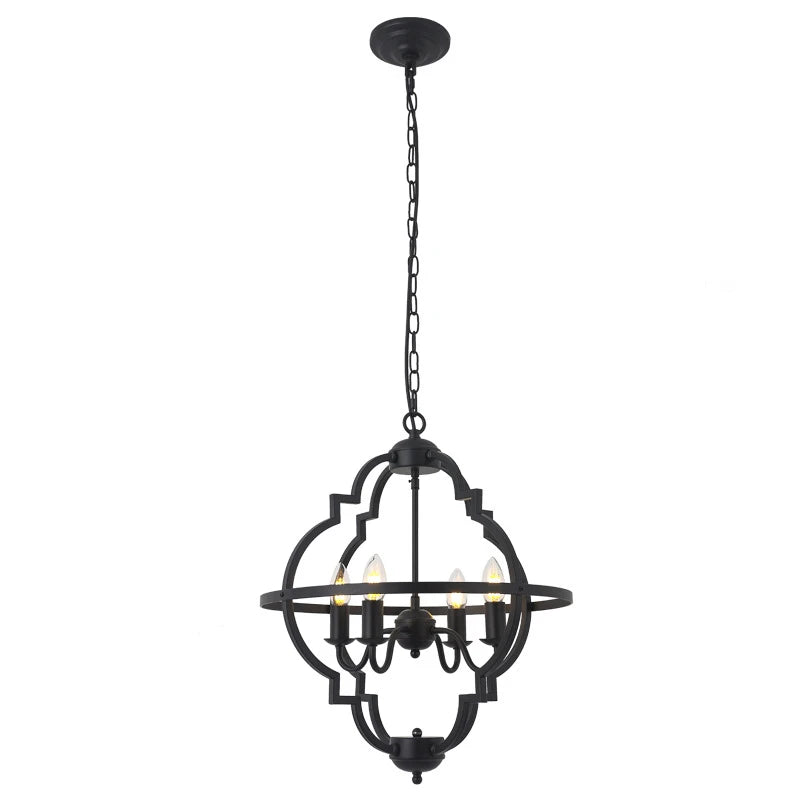
A lantern-style chandelier can suit islands, breakfast tables, or kitchens that need a more defined architectural shape. Featured product: Quatrefoil Cage Chandelier.
Common Kitchen Island Lighting Mistakes
The first mistake is choosing pendants that are too small. Tiny fixtures can disappear above a large island, especially in an open-plan room. If the island is visually important, the lighting should have enough presence to acknowledge it.
The second mistake is hanging fixtures too low. Low pendants may look dramatic in product photos, but they can interrupt conversation and sightlines. If people naturally duck or lean around the fixture, the placement is wrong.
The third mistake is ignoring glare. Clear glass, exposed bulbs, and bright LEDs can be beautiful, but they need the right bulb shape, wattage, and dimming. The eye should notice the glow and the fixture, not fight the bulb.
The fourth mistake is using kitchen island pendants as the only serious light in the kitchen. Island lighting should be part of a larger plan with ceiling lights, task lighting, and possibly wall or accent lighting. The Illuminating Engineering Society publishes deeper standards and lighting guidance, but the everyday principle is simple: one source rarely does every job well.
The fifth mistake is forgetting installation realities. Check canopy size, cord or rod length, sloped ceiling compatibility, fixture weight, bulb access, dimmer compatibility, and local electrical code. For hardwired fixtures, use a qualified electrician where required. If you are buying across countries or renovating a property outside your home market, review Liora Light's global voltage reference guide and global plug guide.
A Simple Planning Method
Here is a practical way to choose island lighting without overthinking it.
First, measure the island length and width. Second, decide whether the room wants one linear fixture, two larger pendants, or three smaller pendants. Third, check the bottom-of-fixture height from the countertop and adjust for sightlines. Fourth, choose a material that supports the kitchen finish rather than competing with it. Fifth, choose bulb warmth and brightness before installation, not afterward. Sixth, make sure the fixture is dimmable if the kitchen is used in the evening.
If the island is unusually long, the ceiling is high, or the kitchen connects to several rooms, a drawing can prevent expensive second-guessing. Liora Light's free 3D drawing service can help you see scale before ordering, especially when choosing between a linear chandelier and multiple pendants.
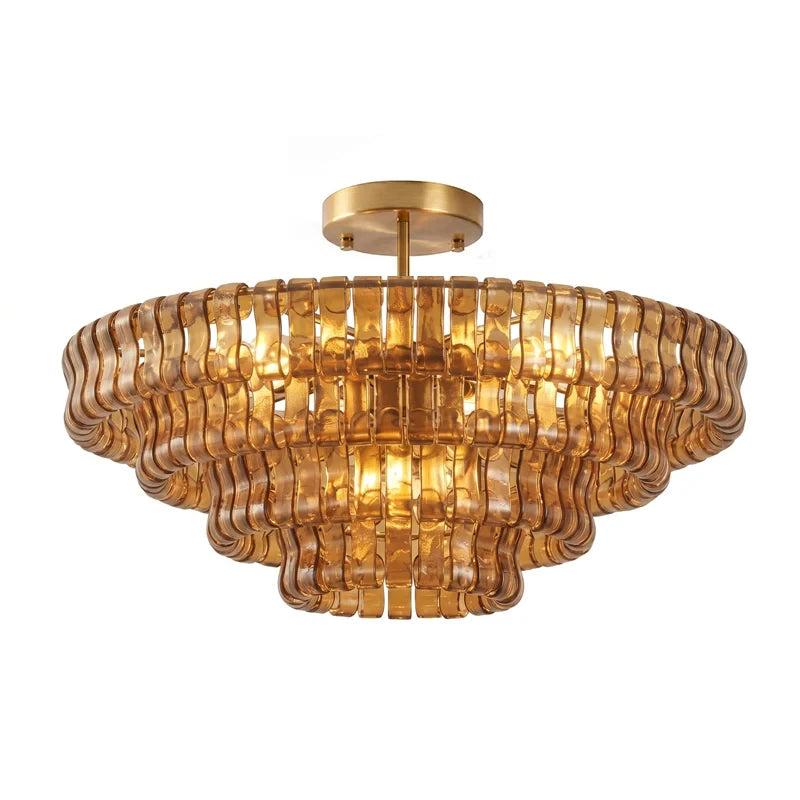
When ceiling height is limited, a ceiling light can sometimes be more elegant than forcing a pendant into the room. Featured product: Ribbon Glass Ceiling Light.
Final Thought
The best pendant lights over a kitchen island do not just fill space above the counter. They make the island feel useful in the morning, calm at night, and connected to the rest of the home. Height, spacing, and brightness matter, but so do material, shadow, and the way the fixture looks when no one is cooking.
Start with the island. Respect the sightlines. Choose a fixture that has enough scale without stealing the room. Then tune the warmth and dimming so the kitchen can shift from work to welcome without changing anything except the light.
FAQ
How high should pendant lights hang over a kitchen island?
A common starting point is 30 to 36 inches between the countertop and the bottom of the pendant. Adjust from there based on ceiling height, fixture size, glare, and whether the pendant blocks the view across the island.
How many pendant lights do I need over a kitchen island?
Most medium islands work well with two larger pendants or three smaller pendants. Long islands may look better with three pendants or one linear island chandelier. The right choice depends on island length, shade width, and the visual weight of the fixture.
Are linear chandeliers good for kitchen islands?
Yes. A linear chandelier is often a strong choice for a long kitchen island because it creates one clean horizontal line and avoids cluttering the ceiling with too many separate fixtures.
What color temperature is best for kitchen island lighting?
Many homes look best with warm white or soft neutral light, often around 2700K to 3000K. Choose a temperature that works with the cabinet, countertop, and under-cabinet lighting so the room feels consistent.
Should kitchen island pendant lights be dimmable?
Yes, dimming is highly recommended. The island needs brighter light for cooking and cleanup, but softer light for evening, dining, and open-plan living.
Can I use paper pendants in a kitchen?
Paper pendants can work beautifully over an island or breakfast area when they are placed away from heavy steam, grease, and direct cooking zones. They are best when you want a softer, calmer look rather than a glossy or industrial feel.
What is better over a kitchen island: glass, metal, or paper?
Glass feels light and crisp, metal gives structure, and paper creates warmth. There is no single best material. Choose the one that supports the room's finishes and the mood you want at the island.