

Akari Paper Lamp Styling Guide by Liora Light explains how soft paper lighting can bring warmth, calm, and sculptural character to modern interiors. Paper shades diffuse light gently, reducing glare and creating a softer atmosphere than many glass or metal fixtures. When paired with wood, stone, linen, and neutral finishes, Akari-style lighting works especially well in minimalist, Japandi, contemporary, and warm modern homes.
That is why Akari-style paper lamps are so useful in modern homes. They work in rooms that are already well designed but still feel a little cold after sunset. They soften strong furniture, calm down hard finishes, and add shape without heaviness. In a living room, a paper floor lamp can make the sofa area feel more human. In a bedroom, a small paper table lamp can replace the sharpness of a bare bedside bulb. In a dining area, a paper pendant can make the table feel quieter and warmer without turning the room formal.
This guide explains how to style Akari paper lamps and washi-inspired lighting in living rooms, bedrooms, dining spaces, reading corners, and open-plan homes. It covers size, shade shape, color temperature, placement, dimming, pairing materials, and the mistakes that make paper lighting look cheap instead of calm.
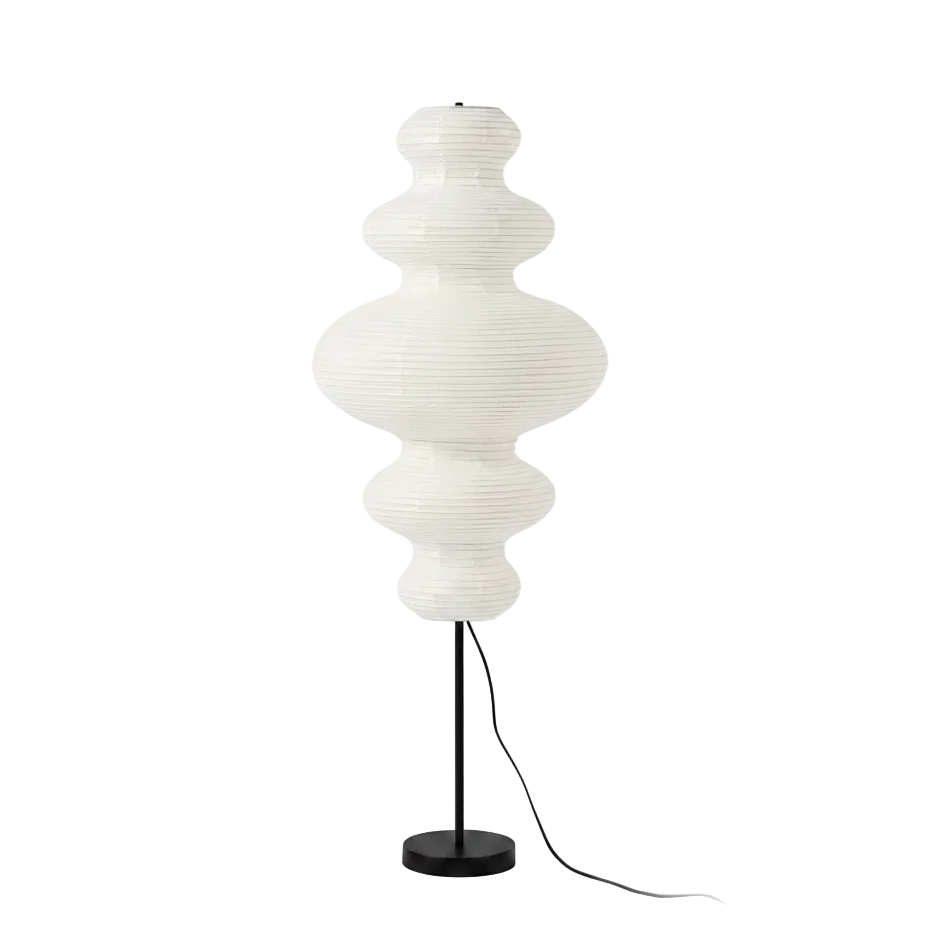
A tall paper floor lamp can soften a living room corner without blocking the architecture. Featured product: Washi Paper Floor Lamp - Akari E.
Akari Paper Lamp Styling Guide for Modern Homes
Most lighting materials announce themselves through surface. Glass reflects. Brass warms. Travertine grounds. Alabaster glows with mineral depth. Paper does something quieter. It makes the light source feel larger, softer, and less aggressive. Instead of seeing a bright bulb or a hard shade, you see a volume of light.
This matters in modern interiors because many modern rooms are full of clean lines. Straight sofas, smooth cabinets, stone counters, large windows, and pale walls can look beautiful during the day but feel too sharp at night. A paper lamp softens that sharpness without forcing the room into a decorative style. It adds atmosphere while staying light on its feet.
The design history of Akari light sculptures is closely tied to paper, bamboo structure, and hand-shaped volume. For background, the Noguchi Museum's Akari archive is a useful reference point. When shopping for contemporary paper lamps today, the lesson is not to copy a museum room. The useful lesson is proportion: the shade should feel like an object in space, not only a cover for a bulb.
At Liora Light, the Akari paper lamps collection is a good place to compare floor lamps, pendants, and table lamps side by side. If you are building a full lighting plan, also look at living room lighting, bedroom lighting, and pendant lamps rather than choosing one fixture in isolation.
Use Paper Lighting When the Room Feels Too Hard
A paper lamp is often the right answer when a room already has strong materials. Stone coffee tables, marble counters, metal shelving, black window frames, glossy tile, and large glass doors all reflect or harden light. Adding another shiny fixture can make the space look more expensive but less comfortable. A paper shade changes the mood because it diffuses light before it reaches the room.
In a living room, a paper floor lamp can sit beside a sofa, lounge chair, or low cabinet and make the seating area feel more settled. In a bedroom, a paper table lamp can make the nightstand feel calm without crowding it. In a dining room, a large paper pendant can lower the emotional temperature of the room, especially if the table and chairs are simple. In an entryway, paper lighting can be beautiful, but it needs enough clearance and the right scale so it does not feel fragile in a high-traffic space.
The best paper lamp placement usually has a little air around it. Do not squeeze a tall shade between a sofa arm and a curtain unless the fixture is very slim. Do not place a paper pendant so close to the ceiling that it loses its shape. Do not hide a sculptural table lamp under a crowded shelf. Paper lamps need space for the silhouette to breathe.
Living Room: Make One Soft Anchor
In many living rooms, the overhead light is either too bright or rarely used. Table lamps help, but they can scatter small pools of light around the room. A paper floor lamp gives the seating area a larger, softer anchor. It is especially useful near a sofa corner, a reading chair, a fireplace wall, or a low media console.
Start by deciding whether the lamp should be seen from the main entrance to the room. If yes, choose a shape with enough presence to read from across the space. A tall column or sculptural shade can work better than a small lamp. If the lamp is mainly for a reading corner, pay attention to height and bulb output. The light should feel comfortable from a seated position, not only attractive in a product photo.
Paper floor lamps pair well with natural textures. Linen upholstery, wool rugs, oak, walnut, plaster, travertine, and matte ceramics all sit comfortably beside paper. If the room already includes travertine lighting or alabaster lighting, a paper lamp can keep the plan from becoming too heavy. Stone gives structure. Paper gives air.
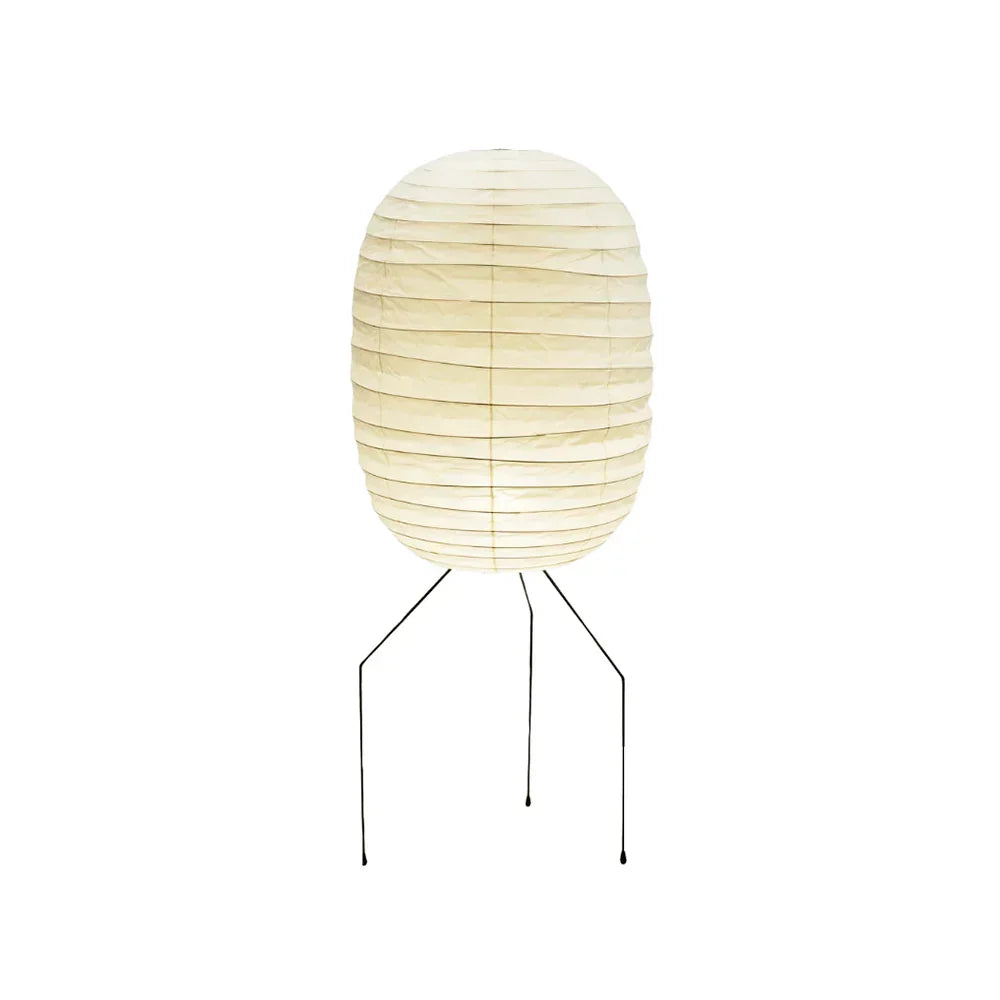
A paper floor lamp works well as a low-glare anchor beside a sofa or lounge chair. Featured product: Akari UF3-DL Floor Lamp.
Bedroom: Keep the Glow Low and Personal
Bedrooms are where paper lamps often make the most sense. The room needs softness more than drama. A paper table lamp beside the bed gives a warm glow without the sharp edge of a bare bulb or clear glass shade. It can also make a plain nightstand feel warmer, especially in rooms with white bedding, simple walls, and minimal furniture.
For bedside use, scale is important. A tiny lamp may look sweet but fail to light the space. A large round shade may feel charming in a photo but crowd the nightstand. Check the lamp diameter, total height, switch position, and how the shade sits relative to the mattress. A good bedside lamp should be easy to reach and should not throw direct glare into the eyes when someone is lying down.
Warm bulbs matter here. A paper shade can soften light, but a cool bulb will still make the room feel wrong. For most bedrooms, 2700K is a strong starting point. If the lamp supports dimming, even better. The bedroom should be able to move from practical evening light to a lower, sleep-friendly glow.
If you are layering a bedroom, pair paper table lamps with a quiet ceiling fixture or a simple wall light. Browse table lamps, wall lamps, and bedroom lighting together so the room does not become a collection of unrelated fixtures.
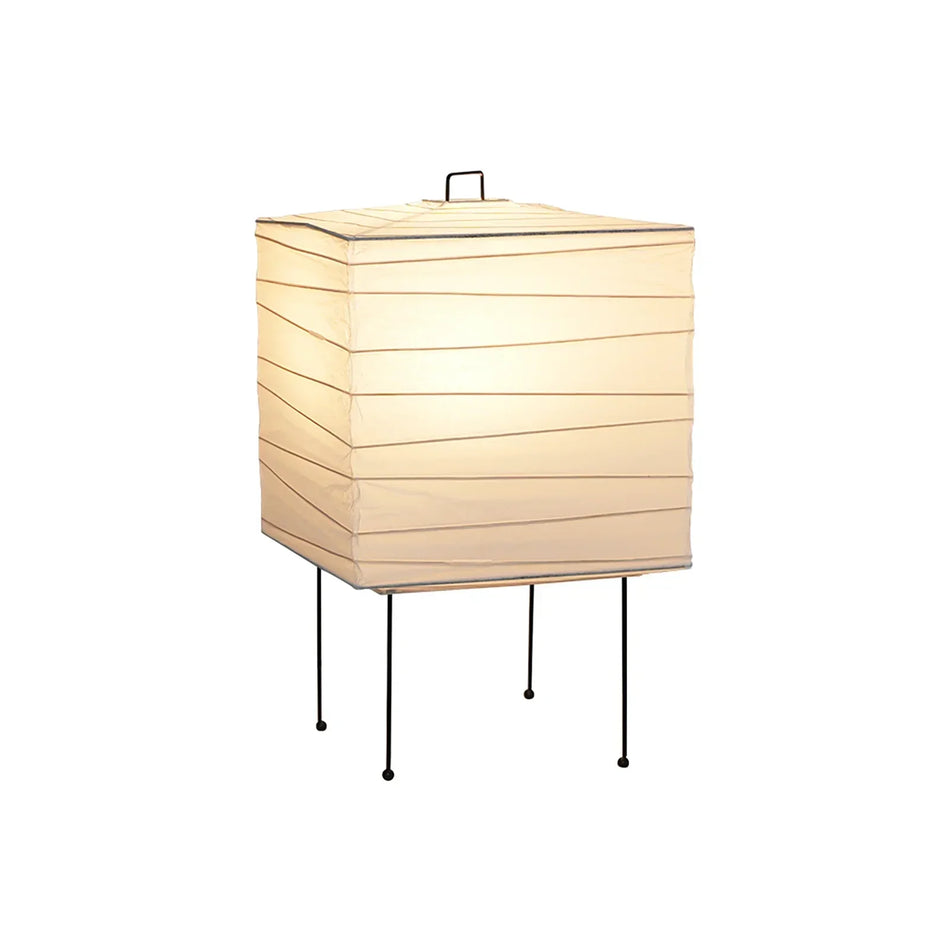
A compact paper table lamp can make a nightstand feel warm without adding visual clutter. Featured product: Akari 3X Table Lamp.
Dining and Kitchen Areas: Choose Volume Carefully
A paper pendant over a table can be beautiful, but it needs the right volume. Too small and it disappears. Too large and it can feel like a floating lantern that belongs to another room. The fixture should relate to the table or island below it, not simply hang from the electrical point.
For dining tables, the bottom of the pendant or shade often sits around 30 to 36 inches above the tabletop, depending on ceiling height, shade size, and sight lines. People should be able to see each other comfortably across the table. If the pendant is broad and opaque, check the view from a seated position before installation. Paper is light visually, but a large shade can still block faces if it hangs too low.
For kitchen islands, paper pendants need extra judgment. Kitchens have steam, grease, splashes, and frequent cleaning. A paper shade may be better over a breakfast nook, dining table, or lower-traffic island than directly above a heavy cooking zone. If you do use paper lighting in a kitchen, keep it away from high-moisture or high-grease areas and make sure the scale is practical. Liora Light's kitchen island ceiling guide can help with spacing and height before installation.
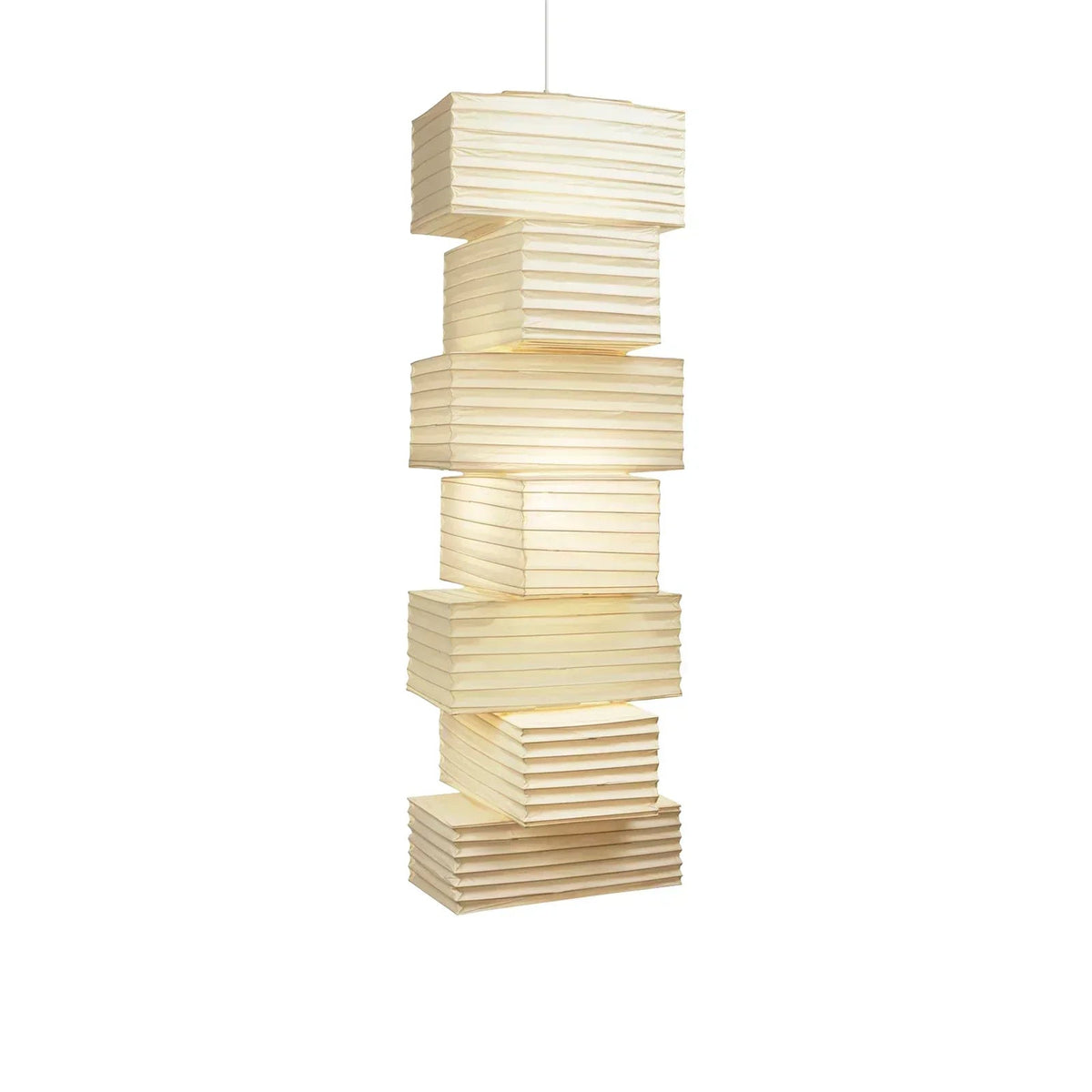
A round paper pendant can soften a dining table while keeping the room visually light. Featured product: Akari 36N Pendant Light.
Floor Lamps: Think About the Shape After Dark
A floor lamp is furniture as much as lighting. It occupies floor space, appears in the corner of the eye, and changes the outline of the room. With paper lamps, that outline becomes especially important because the shade glows as a full shape after dark.
Tall cylindrical or stacked forms can make a room feel vertical, which is useful in low, horizontal spaces. Wider sculptural floor lamps can soften a large blank corner. A floor lamp with a small footprint may work beside a chair, while a larger lamp may need its own breathing room near a wall or window. Before placing it, look at the room from the doorway. The best location is often the place where the lamp balances the room even when turned off.
Do not push a paper floor lamp into a busy corner full of plants, baskets, cords, and side tables. The shade needs visual quiet around it. If the room already has a lot of objects, use a simpler lamp. If the room is spare, the lamp can be more sculptural.
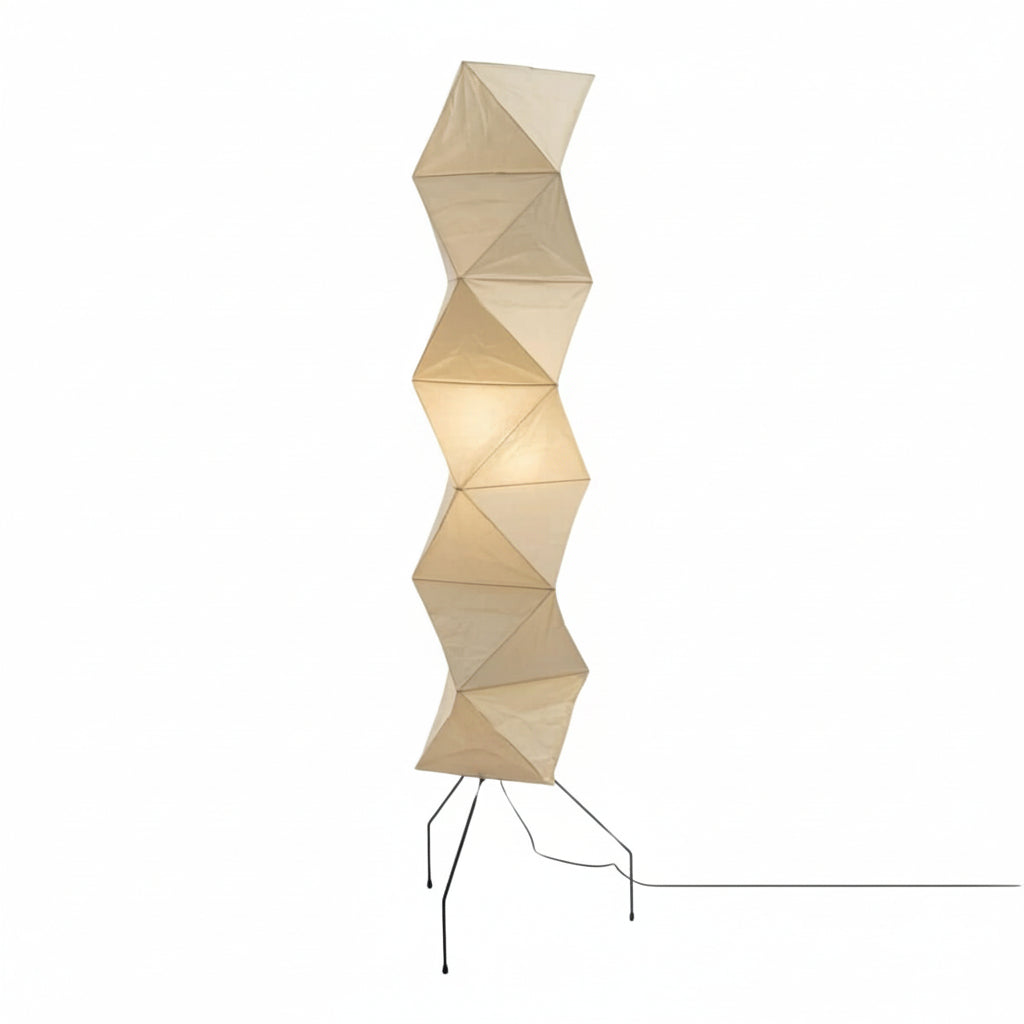
A taller paper floor lamp can give a plain corner height and evening atmosphere. Featured product: Akari UF4-L8 Floor Lamp.
Choose the Right Bulb for Paper Shades
The bulb does a lot of work in a paper lamp. A paper shade will soften the light, but it cannot fix a bulb that is too cold, too bright, or placed badly. For most living rooms and bedrooms, warm white light around 2700K to 3000K is the safest range. It makes paper feel warm instead of gray and keeps skin, wood, fabric, and paint looking natural.
Brightness should match the job. A bedside lamp can be gentle if it is mainly used before sleep. A reading floor lamp needs enough usable light near the chair. A pendant over a table should light the surface without glaring into faces. When comparing bulbs, look at lumens instead of watts. Watts tell you energy use. Lumens tell you brightness. The FTC light bulb shopping guide is a useful reference for understanding bulb labels, and ENERGY STAR's LED lighting overview explains LED efficiency and performance.
If the fixture and bulb support dimming, use it. Paper lighting often looks best below full brightness. The point is not to flood the room. The point is to create a soft layer that makes people want to stay in the room longer.
Pair Paper With Stone, Wood, Brass, and Glass
Paper lamps work because they are visually light, but they still need the right neighbors. With oak or walnut, paper feels warm and domestic. With travertine or alabaster, it creates a good balance between air and mineral weight. With brass, it feels slightly more polished. With black metal, it becomes more graphic and modern. With clear glass, it can keep the room from feeling too reflective.
The mistake is making the whole room too pale and weightless. If the walls, sofa, rug, curtains, and lamps are all soft white, a paper shade may disappear. Give it something to work against: a wood table, a darker chair leg, a stone object, a framed print, a brass detail, or a textured rug. A calm room still needs contrast.
When planning multiple fixtures, avoid matching every lamp too closely. A paper pendant, paper table lamp, and paper floor lamp in one open space can work, but only if their scales and roles are different. One can be the main sculptural piece, another can be a small bedside or side-table glow, and another can be a quiet floor lamp. If everything has the same visual importance, the room starts to feel staged.
Paper Lighting Mistakes to Avoid
The first mistake is using paper lighting where the material is not practical. Bathrooms, damp rooms, greasy cooking zones, and tight high-traffic corners may not be the best fit unless the fixture is specifically suitable for that location. The second mistake is choosing a bulb that is too cool. Paper shades usually want warmth. The third mistake is ignoring scale. Paper fixtures are visually light, but a large shade is still large.
Another common mistake is placing the lamp where the silhouette cannot be seen. If a paper shade is pushed behind a tall plant or squeezed beside a cabinet, the best part of the fixture is lost. Give it breathing room. Let it be simple.
Finally, do not treat paper lighting as a shortcut to a Japandi or warm minimalist room. The lamp can help, but the room still needs proportion, material balance, and good light layering. Use paper where it solves a real problem: glare, coldness, empty corners, harsh overhead light, or a lack of atmosphere.
A Simple Buying Checklist
Before buying a paper lamp, measure the space where it will live. For a pendant, check ceiling height, table or island size, hanging drop, shade diameter, and sight lines. For a floor lamp, check floor footprint, shade height, nearby furniture, and cord path. For a table lamp, check nightstand or console depth, total lamp height, bulb type, and switch access.
Then think about the rest of the room. Is there enough contrast around the paper shade? Does the lamp repeat a shape or material already present? Is the color temperature warm enough? Will it provide real light or only a decorative glow? Is the shade protected from moisture, grease, and heavy contact?
If you are unsure about scale, collect photos, room dimensions, ceiling height, and furniture measurements before deciding. Liora Light's free 3D drawing service can help you visualize how a fixture may sit in your room. For voltage, plugs, shipping, and other practical details, review the global voltage guide, global plug guide, and FAQ page.
FAQ
Are Akari paper lamps good for modern homes?
Yes. Akari-style paper lamps work well in modern homes because they soften clean lines, reduce glare, and add sculptural shape without making the room feel heavy.
Where should I place a paper floor lamp?
A paper floor lamp usually works best beside a sofa, lounge chair, media wall, window, or quiet corner. Give the shade enough space so the silhouette can be seen clearly.
Can I use a paper pendant over a dining table?
Yes. A paper pendant can work beautifully over a dining table if the shade is scaled to the table and hung high enough for comfortable sight lines. Around 30 to 36 inches above the tabletop is a common starting point.
What bulb color is best for paper lamps?
Warm white bulbs around 2700K to 3000K are usually best. They keep the paper shade warm and flattering, especially in bedrooms, living rooms, and dining spaces.
Are paper lamps bright enough for reading?
Some are, but it depends on bulb output, shade density, and placement. For reading, choose enough lumens and place the lamp near the chair or bedside area instead of relying on ambient glow alone.
Can paper lighting work in a kitchen?
It can work in dining corners, breakfast nooks, or lower-traffic island areas, but paper shades should be kept away from heavy grease, steam, and moisture unless the fixture is designed for that environment.
How do I keep paper lamps from looking cheap?
Choose the right scale, use warm bulbs, give the shade breathing room, and pair it with grounded materials such as wood, stone, brass, linen, or textured rugs. The lamp should look placed, not squeezed in.